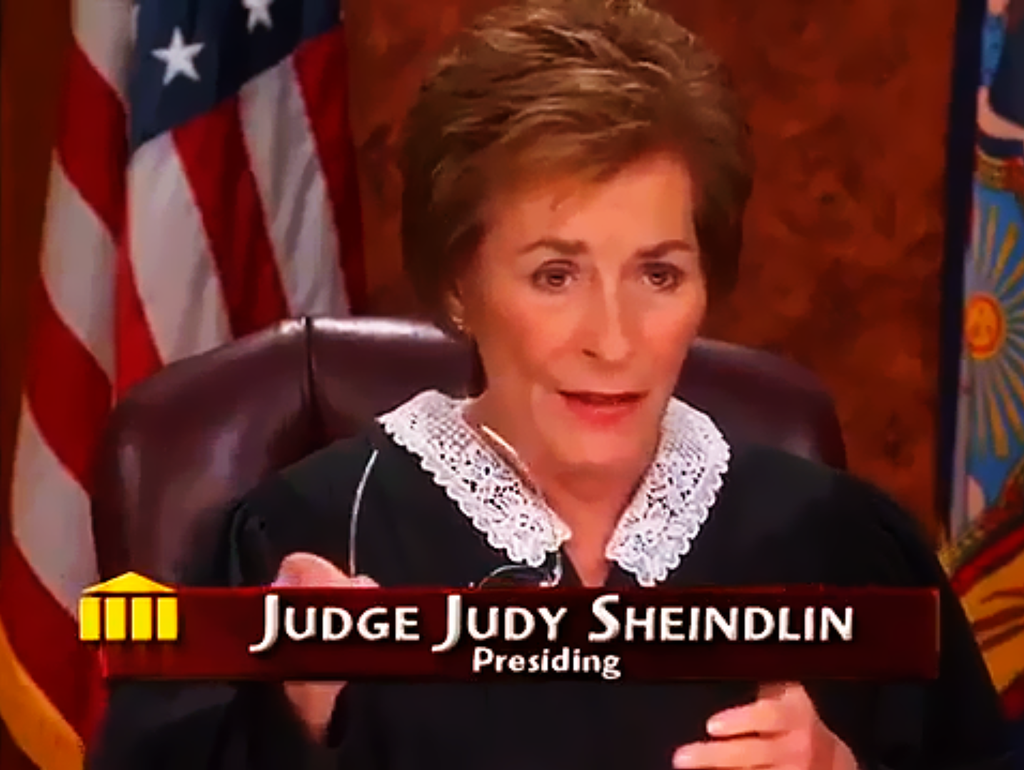
That exchange captures the gravity of a dispute that began inside a shared beach house and ended in a public reckoning over online retaliation. Mary Class had come to court over alleged damage to her home, defamation, and harassment.
A Long Tenancy at the Beach House
Before the messages, photographs, and online posts, there was a rental arrangement that had lasted for years. Steve Reid moved into Mary Class’s house in August 2013. Robert Turner followed in August 2014. By the time the tenancy was ending, six people were living in the home.

The paperwork was less settled than the occupancy. Class said there had initially been a written lease. Reid responded that the tenants never formally signed one and acknowledged that the arrangement had effectively become month-to-month. That distinction mattered because the conflict was not presented as a sudden intrusion by strangers. These were long-term tenants who had built routines inside the property and, by Reid’s own account, regarded it as a desirable beach house and a good deal.

The familiarity helps explain the resistance that followed, though it does not excuse what came later. A housing relationship that had survived several years was about to end, and the people involved did not agree on when that ending had truly become final.
The Notice That Changed the Relationship
Class testified that she told the tenants in January 2017 that she would not renew the lease because she planned to move back into the house. From her perspective, that gave them approximately six months to prepare. Turner said Class had made similar statements in earlier years without following through, making the new warning difficult to believe. Brady Ulrich, another housemate, said he did not remember receiving notice in January and recalled learning about the move only a month or two before he left.

On April 30, Class sent a 30-day notice through a group text, setting June 1 as the expected move-out date. Reid called the notice unofficial and said he never received the message directly because he had blocked his landlord’s number. The judge had little sympathy for that explanation, pointing out the obvious risk in cutting off a landlord’s main channel of communication.

The household began to thin. Six people were still in the house on April 30; by May 30, only three remained. Ulrich moved out on May 31 because he was getting married. Reid and Turner stayed longer. They said rent for May had been paid around April 27, June rent was paid on June 9 or 10, and they moved to a new place on June 11. Turner maintained that they had agreed with Class to pay only for the days they remained in June.
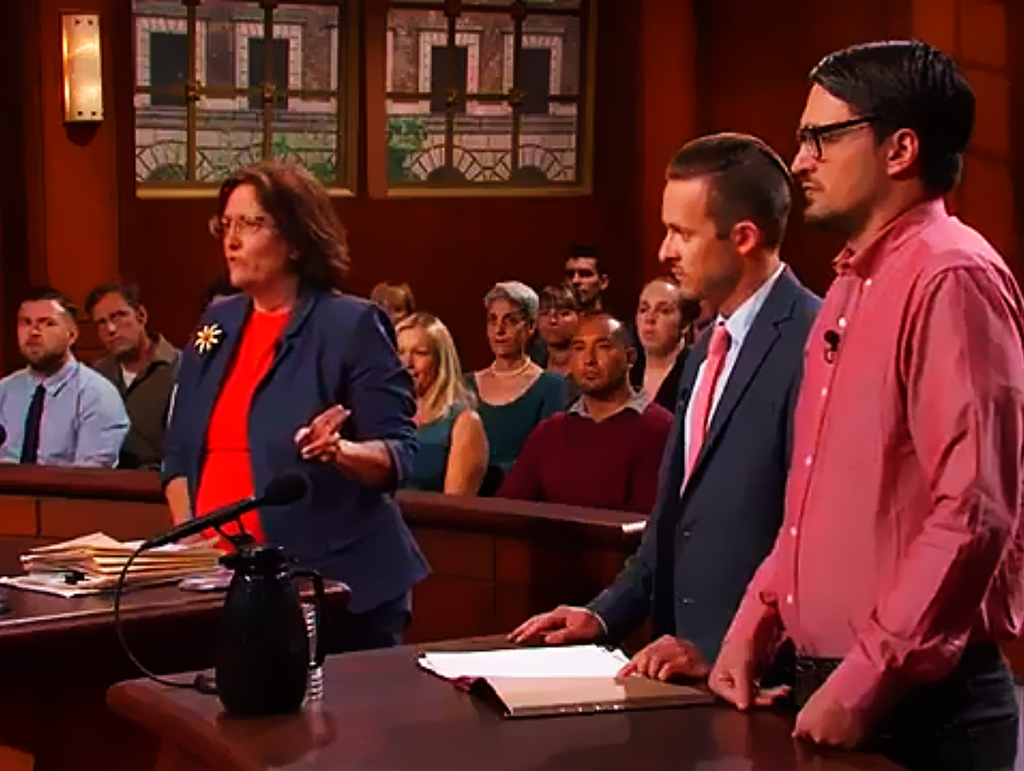
These details formed the practical dispute: notice, rent, and possession. But by then, the conflict had already crossed into a different arena.
When the Conflict Moved Online
Reid admitted that he was the person behind the internet posts about Class. The hearing described the material as obscene, vile, and designed to harass. Class said her address had been spread online and that material also reached her phone and her daughter’s phone. She further testified that responses were still arriving six weeks after Reid said he had removed the posts.

The exact content is not reproduced in the transcript or described clearly enough in the official clips to report responsibly. That absence matters. It prevents exaggeration, but it does not erase the conduct Reid acknowledged or the continuing contact Class said she received.
The timeline was not perfectly clean. Class said the online effort began in January, when she first told the household that the lease would not be renewed. Other exchanges placed parts of the campaign after the April notice. The most accurate conclusion is narrower: the posts emerged during the 2017 struggle over the end of the tenancy, not during the earlier years when Reid had lived in the house without making similar attacks.

Where the Other Tenants Stood
One of the hearing’s most important distinctions concerned responsibility. Turner denied participating in the posts and said he did not know Reid had created them. Ulrich also denied prior knowledge. According to the testimony, Reid did not show the posts to his housemates or tell them what he had done.
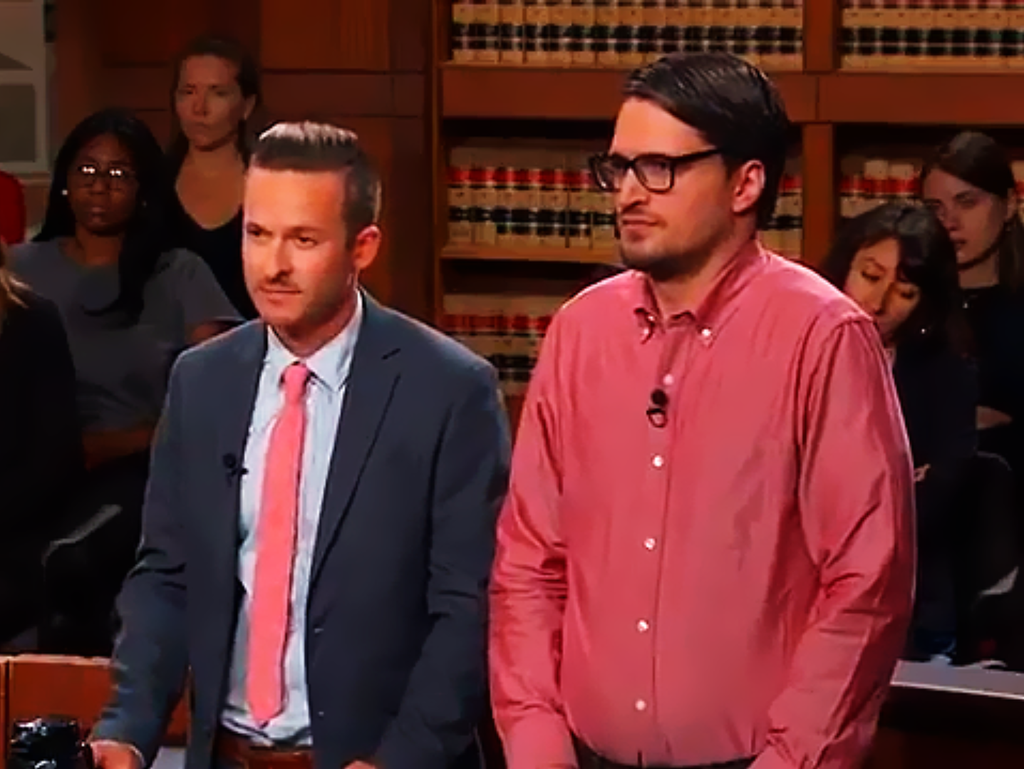
That separation kept the case from becoming a blanket accusation against everyone who remained in the house. Class had sued both Reid and Turner, but the evidence presented in the hearing tied the online conduct directly to Reid. The final ruling reflected that difference.

The Provocation Argument
Reid insisted that his actions did not arise simply because he had been asked to move. He said tensions had accumulated and offered a folder of text messages that he believed showed provocation. One dispute involved a message concerning a friend who had immigrated from Nigeria. Other exchanges concerned parking on the grass, care of the garden, and Class’s retention of a $5,000 security deposit.

The judge repeatedly asked Reid to identify the single worst communication from Class—the message that, in his mind, justified what he had sent into public view. The examples he selected did not persuade her. Even if the landlord’s messages were rude or offensive, the court’s focus remained on the scale and method of Reid’s response: publishing material online, circulating personal information, and causing contact to continue after the posts were supposedly removed.

That is where the hearing’s emotional center shifted. It was no longer mainly about whether a text was tactless, whether a car had been parked on the lawn, or whether a deposit should have been returned. It was about choosing public humiliation as retaliation.
A Split Decision
Class’s total claim was $5,000, the limit identified during the program. She also alleged substantial damage to the house, while Reid confirmed that she had retained the security deposit. The hearing did not provide an itemized calculation separating property damage, defamation, and harassment. Instead, the judge concentrated on the admitted online conduct and its apparent purpose.

The outcome was direct. The claim against Robert Turner was dismissed. Class was awarded $5,000 against Steve Reid.
A separate Los Angeles County small-claims docket identifies the parties as Mary Louise Class, Steven Reid, and Robert Sam Turner and records a July 2017 filing; that public docket should not be confused with the decision delivered in the televised proceeding.
What the Case Reveals
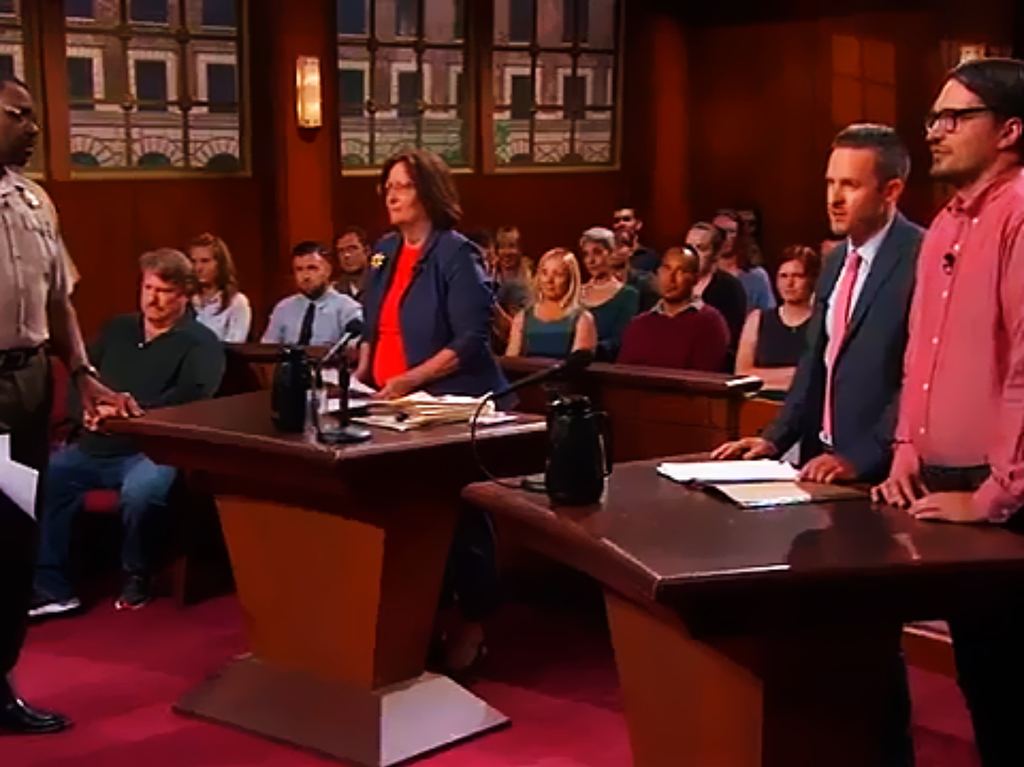
This was a civil dispute, not a criminal prosecution. Yet it belongs in the true-crime conversation because it documents a recognizable escalation pattern: a private grievance moves online, an audience of strangers becomes a weapon, and the target continues to feel the impact after the original post is removed.

Class’s case also shows why precise attribution matters. Reid admitted posting the material. Turner and Ulrich denied involvement. The judge treated those positions differently. In a story filled with collective living arrangements and shared conflict, responsibility ultimately turned on individual conduct.

Most of all, the hearing demonstrates that context can explain anger without legitimizing retaliation. Reid believed he had been provoked. The judge examined that claim and rejected it as a defense for what followed. A disagreement over a home had become something more invasive—and the final award placed the cost on the person who chose to take it public.

FAQ
What was Mary Class suing Steve Reid and Robert Turner for?
Mary Class’s claim involved alleged damage to her home, defamation of character, and harassment. The televised hearing focused most heavily on the obscene online material that Steve Reid admitted posting.
Did Steve Reid admit posting about Mary Class online?
Yes. Reid acknowledged making the posts. He argued that earlier communications from Class had provoked him, but the judge rejected those messages as justification for the online campaign.
Was Robert Turner found responsible for the online harassment?
No. Turner denied knowing about or participating in Reid’s posts, and the judge dismissed Class’s claim against him.
How much did Mary Class receive in the Judge Judy ruling?
The judge awarded Class $5,000 against Steve Reid. The hearing did not provide a detailed breakdown assigning portions of that amount to property damage, defamation, or harassment.