
When Nugget entered the courtroom, the legal dispute briefly became personal. Jenna Khalessi had not seen the dog for about a month, and the judge watched as Nugget appeared ready to greet her. But affection was not the question before the court. The question was whether love, care, and payments could overcome documents naming her former boyfriend, Michael Traeger, as the purchaser.
A Breakup and a Dog in Court

The case began as a dispute between former partners but quickly became a question of legal ownership. Twenty-three-year-old Jenna Khalessi sued her ex-boyfriend, Michael Traeger, seeking the return of Nugget and accusing him of falsely alleging that she had assaulted him. A courtroom recap described Traeger as countersuing for unpaid bills and the cost of the dog.

At the start of the hearing, the judge had read the complaint and the answer. Nugget was present in the courtroom. The dog had apparently not seen Jenna for roughly a month, and the judge allowed a brief greeting before turning to the evidence.

The judge summarized the dispute plainly: the couple had been together, they were no longer together, and they were fighting over the dog. The court would have to determine who owned Nugget—not simply who felt most attached to him.
That distinction shaped every question that followed.
The Relationship Timeline
Jenna said she and Michael began dating in April 2015. At that time, she lived in an apartment with two roommates and had a lease. She said she began sleeping at Michael’s Lawrence apartment most nights in May, gradually bringing more of her belongings there.

The precise move-in date became a source of tension. Jenna initially struggled to identify it, then said the couple moved into a new apartment on September 1, 2015. Between May and September, she said, she still received mail at her roommates’ apartment and remained responsible for that lease. She ultimately ended it after paying approximately $2,000 to a roommate. The judge returned to these details while testing her timeline.

The questioning was not about rent alone. It was about where Nugget lived, who cared for him, and what the couple’s household arrangement looked like before and after the relationship ended.
Who Paid for Nugget?

Michael testified that Nugget was purchased on June 18, 2015. He said the dog spent every night with him from the date of purchase until September 1, when the couple moved into a new apartment together.
Jenna said Nugget never spent the night at her apartment with her roommates because animals were not allowed there. When the judge pressed her on the point, Jenna explained that she had been staying at Michael’s apartment. The judge asked for the names and telephone numbers of the roommates, then set that line of questioning aside when the pet restriction was clarified.
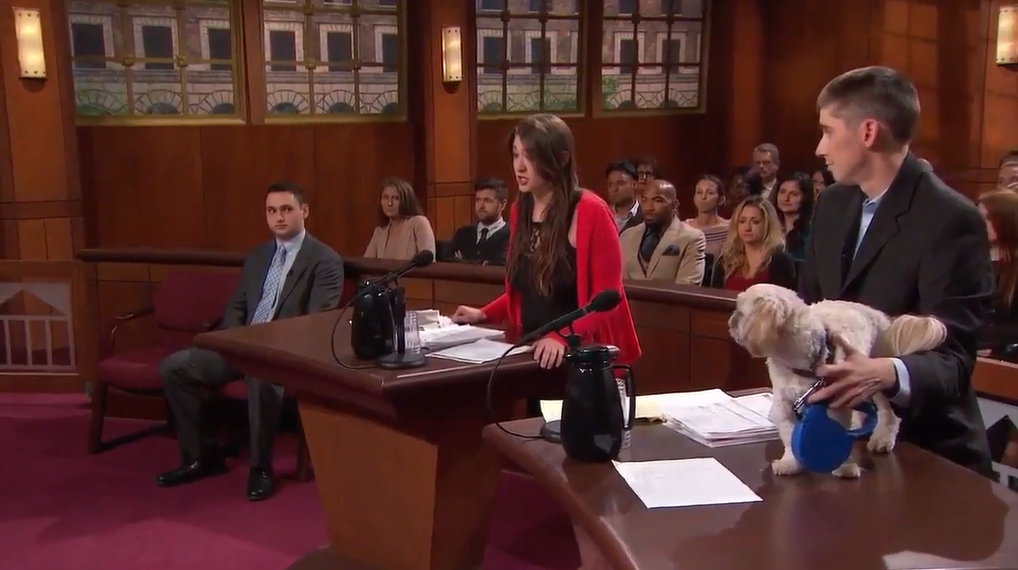
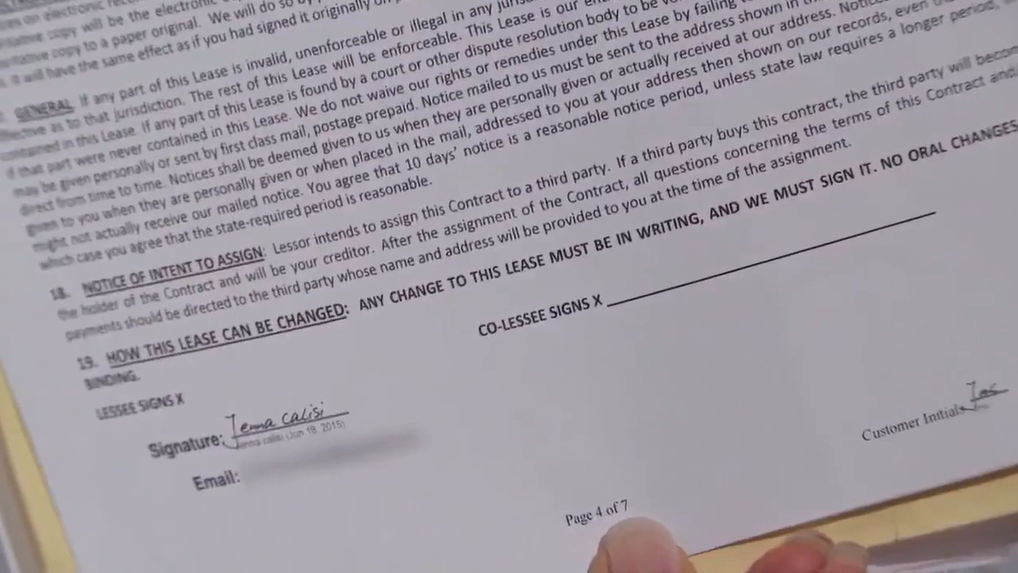
The dog came from Puppy Palace and was financed through two parties. The paperwork identified Michael as the lessee or purchaser, while a co-lessee field was described as “nobody.” Jenna’s signature appeared because, Michael said, he asked her to put down her credit card and sign when the financing company processed the transaction.
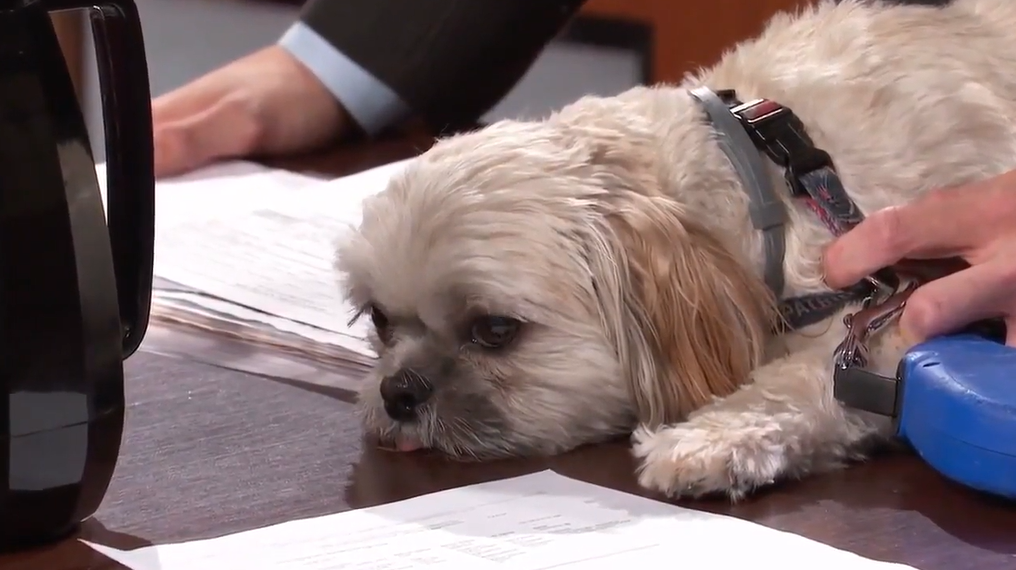
Jenna said she cared for Nugget, treated him as her child, and maintained an Instagram account for him. Michael agreed he stayed home with the dog, but the judge’s focus remained on the named purchaser and financing agreement.
The Paperwork Becomes the Center of the Case
The judge asked Jenna directly whether she was listed on the dog’s lease. Jenna said her name was not on it, although her signature appeared on the paperwork. She also acknowledged that she was not listed as the purchaser of Nugget.

Jenna argued that her payments and daily care gave her a claim to the dog. She described the practical reality of the relationship: she worked, attended school, paid expenses, and believed Nugget was her child. Michael, in her account, remained home with the dog because he did not have a job.
The judge rejected the idea that those facts changed the ownership documents. The ruling was blunt. Michael was identified as the registered owner or purchaser, Nugget had consistently been with him, and he was named on the lease connected to the dog. The judge told Jenna that she had no case on the ownership claim as presented.

The judge compared the situation to a vehicle. A person might be allowed to use a car and make payments toward it, the judge explained, but that would not automatically make that person the title holder. The same reasoning applied to Nugget: Jenna’s involvement in the household did not, by itself, convert her into the legal purchaser.
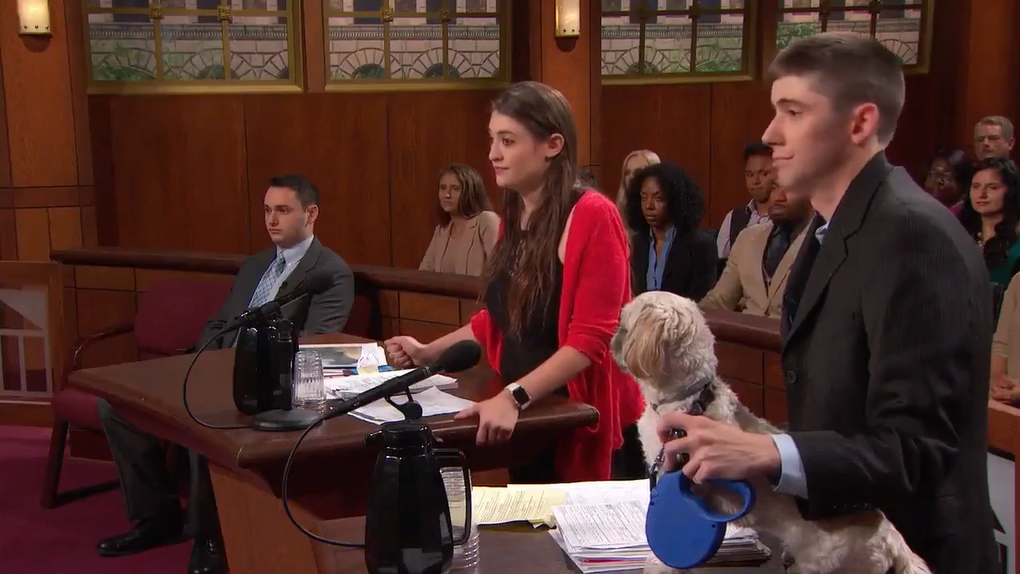
The judge also criticized the financing arrangement as “sort of unconscionable,” but that criticism did not alter the conclusion that the documents identified Michael as the purchaser.
The Payments and the Separation

Payment records created another dispute. Jenna said she made the last payment on June 20, 2016, then acknowledged no payments in July, August, September, or October. She said the financing company warned that Nugget could be repossessed, but the judge treated that part of her account as hearsay.
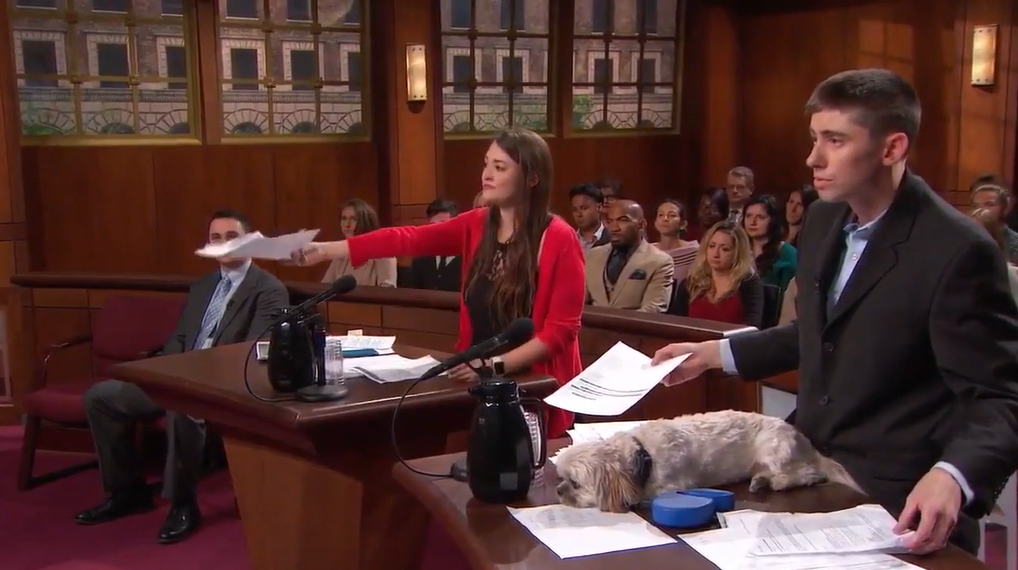
A financing record was described as showing that Michael made only two payments, on August 25, 2016, and September 21, 2016. After reviewing a highlighted bank statement, the judge said it appeared Jenna had made the June 20 payment. The broader payment history remained disputed, but the judge separated it from ownership: payments did not make Jenna the purchaser under the documents shown.
The relationship itself had ended after periods of separation and reconciliation. Jenna said the couple separated once in April, briefly reunited in May, and finally separated when she moved out on June 1, 2016. The case then moved from a shared household to a fight over who would retain Nugget.

The Judge’s Ownership Ruling
The ruling did not award Jenna the dog. Instead, the judge explained a conditional path tied to the financing agreement. If Michael had fully paid the bill and it was not delinquent, the judge expected that to be true. If payments later became delinquent, the leasing company could repossess Nugget after giving notice.
If that happened, Jenna might be able to pay off the contract and obtain the dog. But Michael could not simply give her title while the financing company’s rights remained in place. The judge told Jenna that the documents did not allow her to become the owner merely because she had lived with Nugget, helped with payments, or cared for him.
The court therefore ruled for Michael on the ownership issue. The result was emotionally difficult but legally narrow: the evidence presented identified him as the purchaser, and the dog had consistently been in his care.

The Unresolved Allegations
The opening caption included Jenna’s allegation that Michael had falsely accused her of assault. A later preview separately contained claims that Jenna broke into his home and took Nugget, while Jenna said she was physically assaulted outside. Both sides described police involvement and messages involving another woman.

Those statements were not findings in the main ownership ruling. The transcript records competing allegations and says police directed the dispute toward civil court, but does not establish that burglary, theft, assault, or threats were proven. They should be treated as allegations, not conclusions.

The hearing’s central issue remained Nugget’s documented ownership. Jenna’s attachment was evident, and the dog appeared happy to see her. But the judge’s decision turned on the lease, financing papers, purchaser designation, and the dog’s established residence with Michael.

For readers, the case illustrates why pet disputes after a breakup can become legally complicated. A shared home, shared expenses, and shared affection do not always create shared legal ownership. When financing documents name one purchaser, a court may look first to those records—even when another person says the animal was part of their daily life and family.
FAQ
Jenna Khalessi is the 23-year-old plaintiff who sued her ex-boyfriend, Michael Traeger, seeking the return of Nugget and raising allegations involving a false assault accusation.
Michael Traeger is Jenna Khalessi’s former boyfriend and the person identified in the dog financing paperwork as the purchaser or lessee of Nugget.
Michael testified that Nugget was purchased on June 18, 2015.
The judge identified Michael as the registered owner or purchaser based on the documents shown, the dog’s consistent residence with him, and his name on the dog lease.
The testimony indicated that Jenna made at least some payments, including a payment the judge said appeared to have been made on June 20, 2016. The broader payment history was disputed.
No. The judge told Jenna she had no case on the ownership claim as presented and ruled that the documents identified Michael as the purchaser.
The judge said that if the financing company repossessed Nugget for nonpayment, Jenna might be able to pay off the contract and obtain the dog. This was described as a conditional possibility, not an outcome that had already occurred.
Not in the transcript provided. The SRT records competing allegations and police involvement, but the main ruling concerned ownership and financing documents rather than a finding that assault, theft, or burglary had been proven.