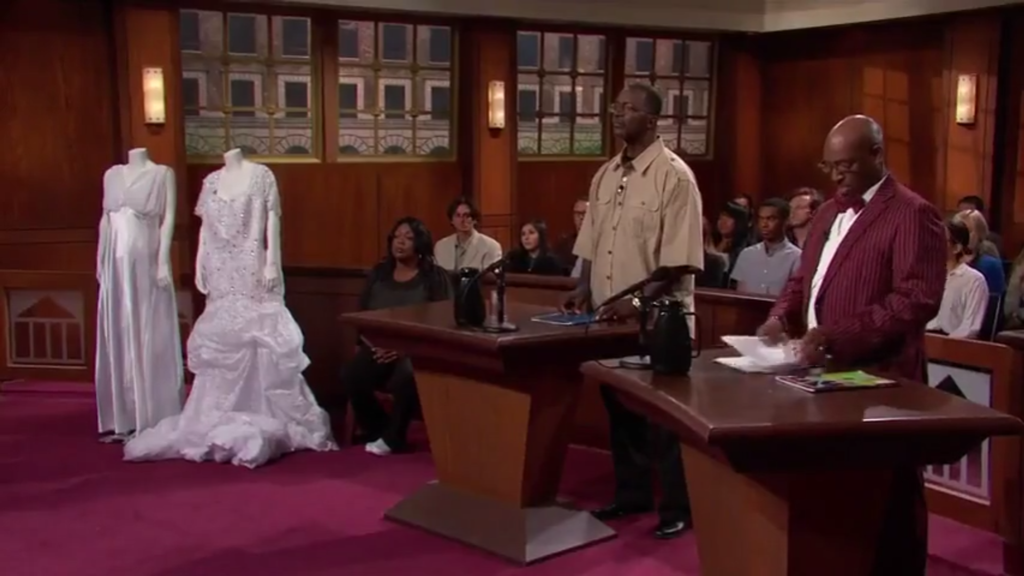
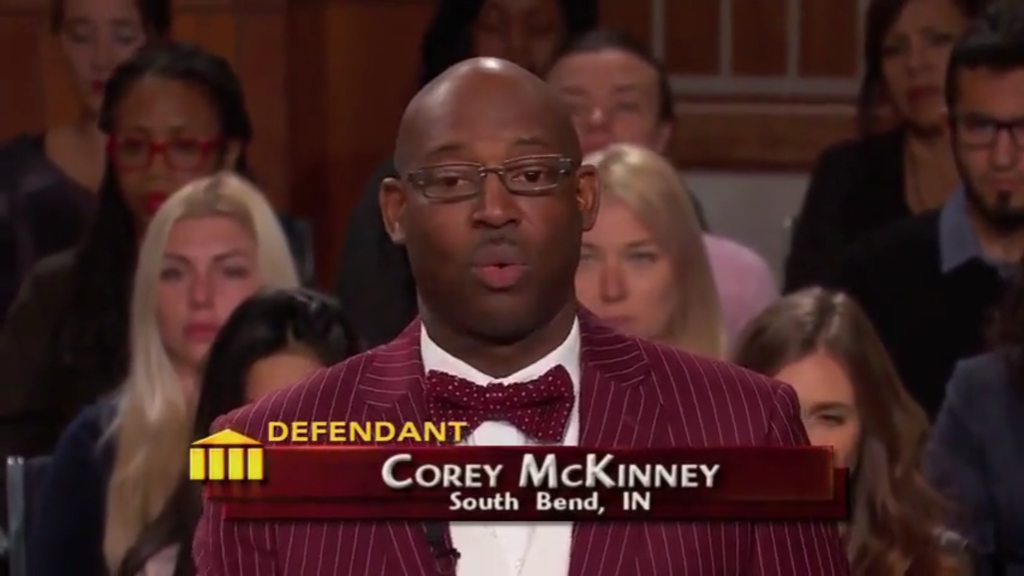
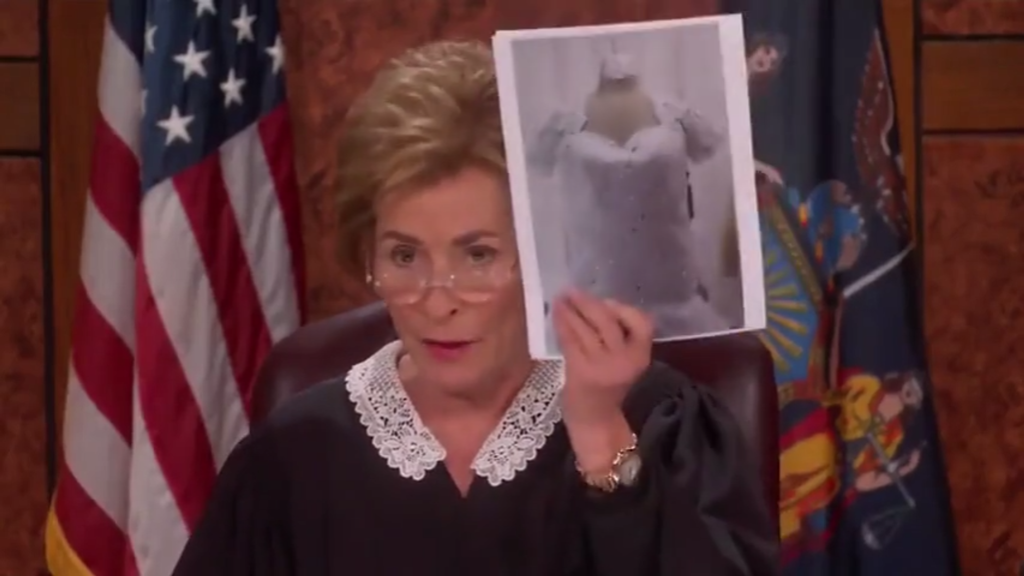
When Judge Judith Sheindlin stepped down from her bench to run her hands along the interior lining of a disputed white wedding gown, the defense presented by South Bend dressmaker Corey McKinney unraveled in seconds. Under the scrutiny of the court, the fabric told a story of rigid satin, faulty measurements, and an outsourced order that left a bride without a wearable dress days before her ceremony.
Case Overview: The Six-Week Rush in South Bend
With their wedding date set for July 30, Wadell Newman and his fiancée, Felicia, faced a narrowing window to secure a bridal gown. After searching through retail bridal shops and finding nothing that matched her personal style or body type, the couple sought recommendations from friends in their local community of South Bend, Indiana. Those inquiries led them to Corey McKinney, a local shop proprietor and tailor known in the area.

The couple first entered McKinney’s shop approximately one week before Father’s Day—around June 11. That initial visit left roughly six weeks to design, construct, fit, and finalize a custom bridal gown. Wadell Newman testified that they placed their trust in McKinney’s local reputation, believing a direct commission would provide a properly tailored garment.
Rather than supplying a commercial pattern or physical photographs, Felicia arrived with a conceptual idea of what she wanted. To translate that idea into a tangible design, McKinney used online style catalogs to show her various silhouettes. From those digital images, Felicia selected modular design components: a specific bodice top, a complementary skirt bottom, and customized short sleeves.
| CHRONOLOGICAL TIMELINE: NEWMAN v. McKINNEY | |
Date | Event & Courtroom Evidence |
~June 11 | First consultation at South Bend shop; styles selected; McKinney takes initial body measurements (~6 weeks to wedding). |
~July 18–19 | First fitting (~2 weeks before wedding); bride discovers gown has no stretch, bust cups are misaligned, and hips are too tight to sit. McKinney pins the garment for release. |
~July 23 | Second fitting (1 week before wedding); outside seamstress tells parties the dress was never measured properly for the bride. Seamstress takes gown to her private shop. |
~July 27 | Final fitting at third-party shop (3 days before wedding); dress remains unwearable and restrictive. Bride leaves dress behind. |
July 30 | Wadell and Felicia Newman’s wedding date; replacement dress used. |
Court Hearing | Wadell Newman sues for $750 refund plus damages; Judge Judy awards full $750 refund and dismisses speculative claims. |

The Custom Order and the Spandex Mandate
From the moment the order was placed, the choice of textile was the central requirement of the contract. Felicia testified under oath that she explicitly told McKinney the gown needed to incorporate a stretch or spandex base material. As a heavy-set and wide-chested woman, she emphasized that a flexible fabric with natural give was essential for mobility, breathing room, and the physical ability to sit during the reception.
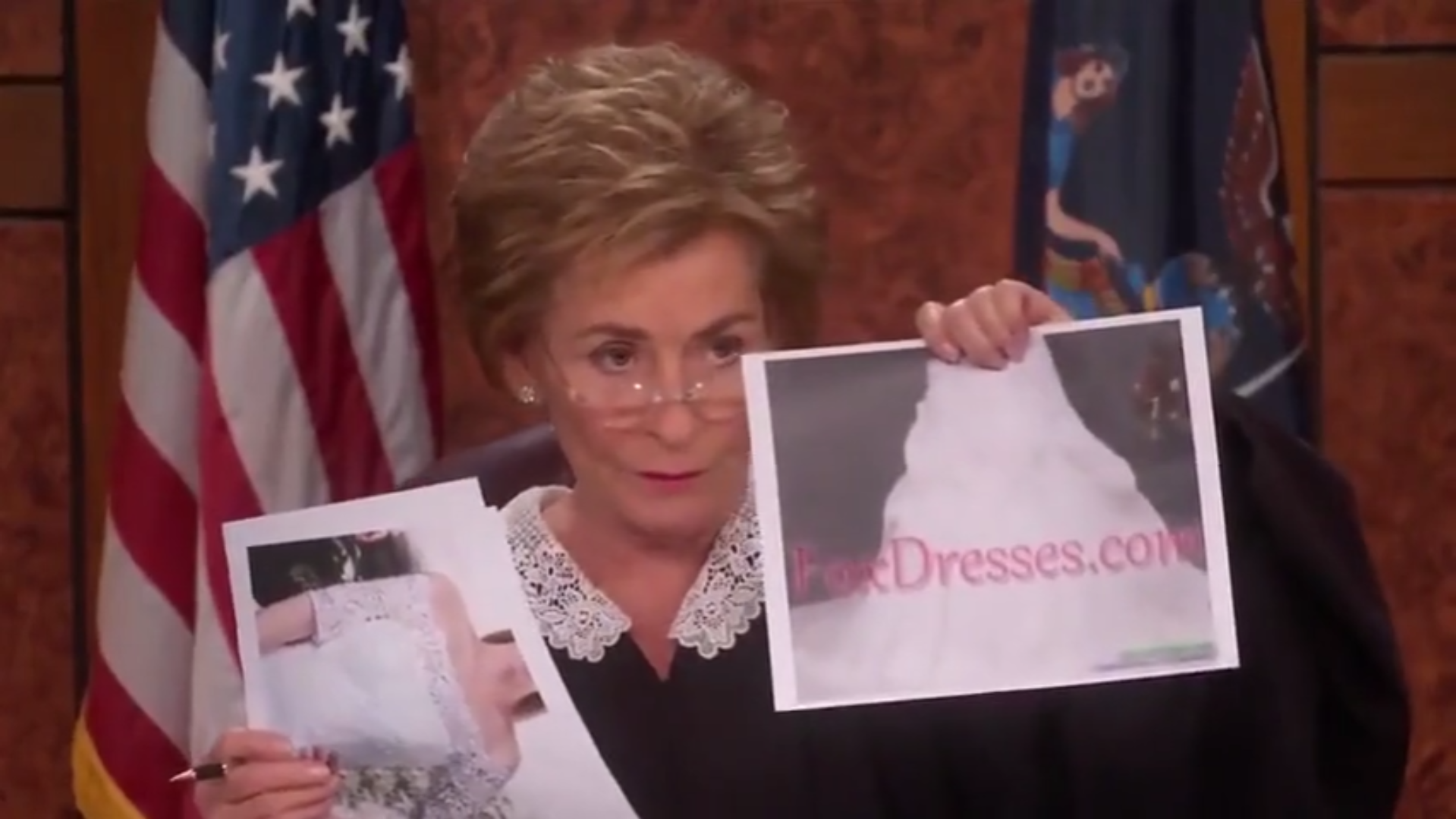
McKinney acknowledged during the hearing that fabric flexibility had been discussed, presenting paperwork that he claimed specified stretch satin. However, bridal construction requires coordinating distinct fabric layers: an exterior decorative lace and an interior structural lining. While the outer lace overlay naturally possessed no elasticity, the functional fit depended entirely on the composition of the undersurface.
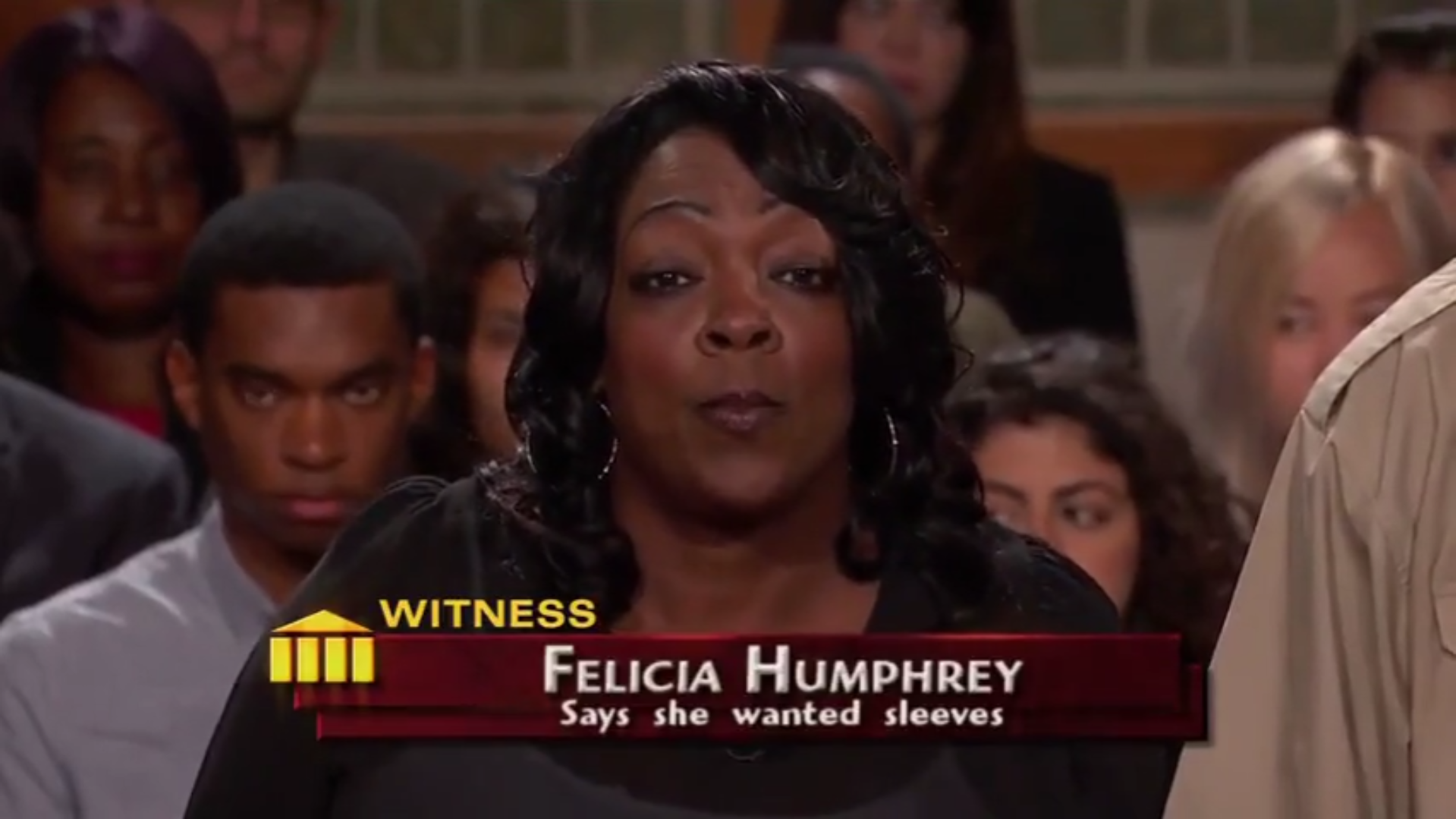
When the dress finally arrived weeks later, the structural flexibility Felicia had requested was completely absent.
The Fitting Room Breakdown: Pins, Tight Hips, and Escalation
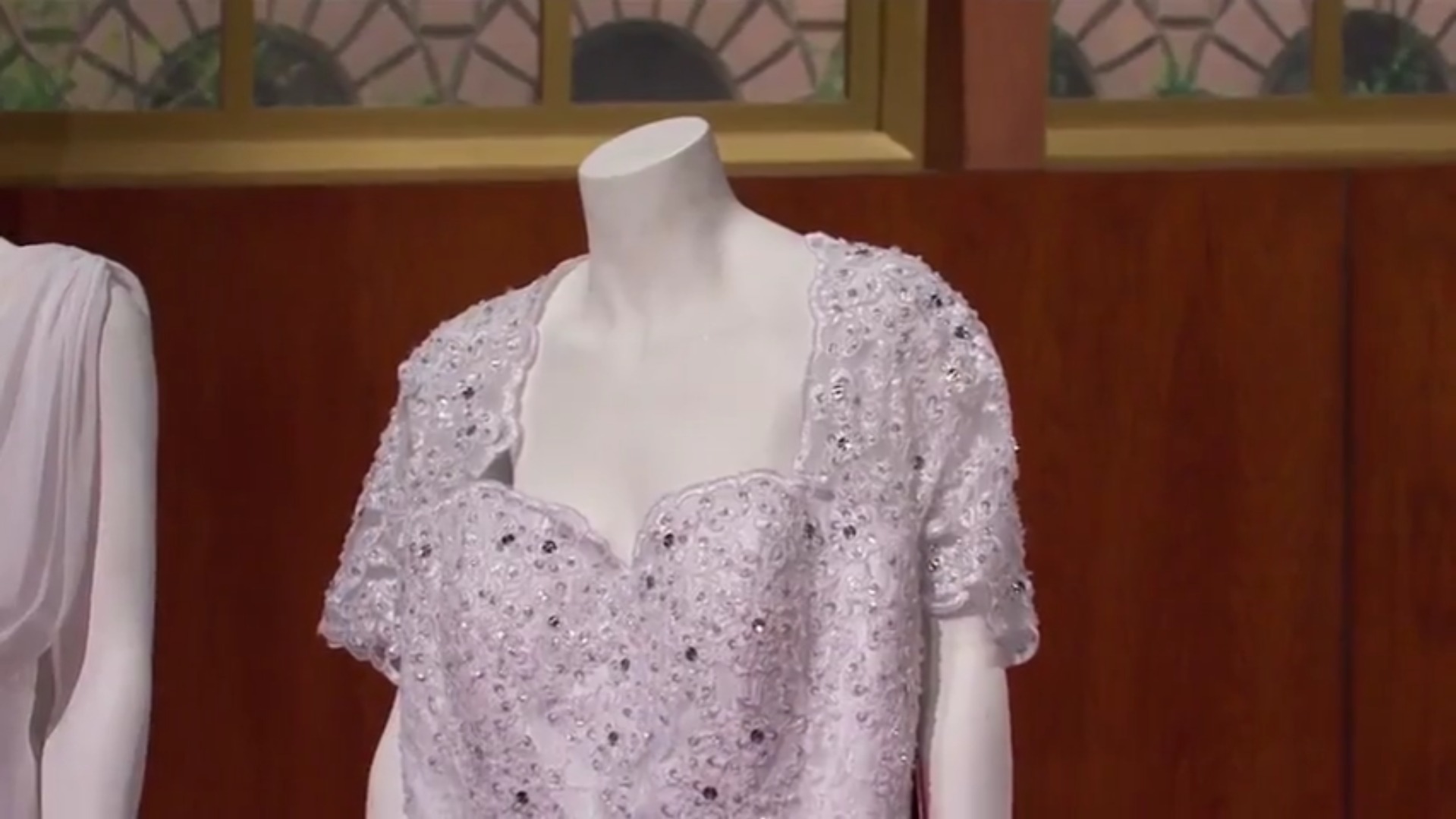
The operational failure became undeniable during the initial fitting on July 18 or 19—less than two weeks before the scheduled ceremony.
When Felicia tried on the gown, the cut failed to fit her body in several fundamental areas:
- The Bust Line: The built-in bra cups were positioned too closely together for her wide-chested build, distorting the neckline.
- The Hip and Waist Proportions: The torso and hip panels were cut so narrowly that she could not sit down or move comfortably.
- The Lining Material: The interior fabric provided zero elasticity, causing the garment to pull rigidly against her frame.
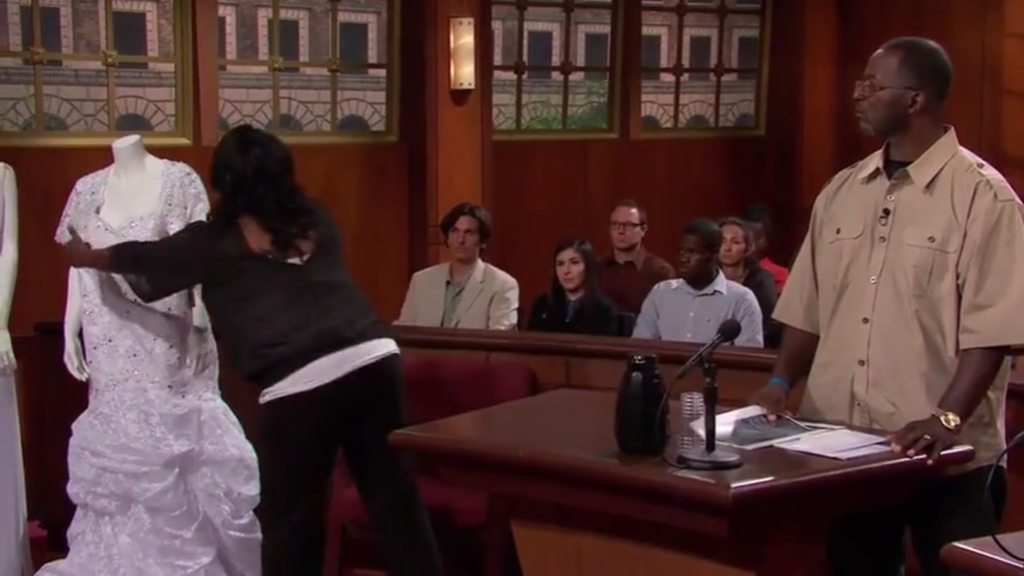
When Felicia pointed out the lack of shape and give, McKinney told her that adjustments with scissors and pinning would fix the issue. He placed pins along the side seams to indicate where fabric needed to be released for the seamstress.
One week before the wedding, Felicia returned to the shop for what should have been a final adjustment. Instead of resolving the problem, McKinney brought in an outside seamstress to inspect the garment. Felicia testified that upon examining the dress, the seamstress stated plainly: “There’s really nothing I can do with this dress… the dress was not measured for [you].”
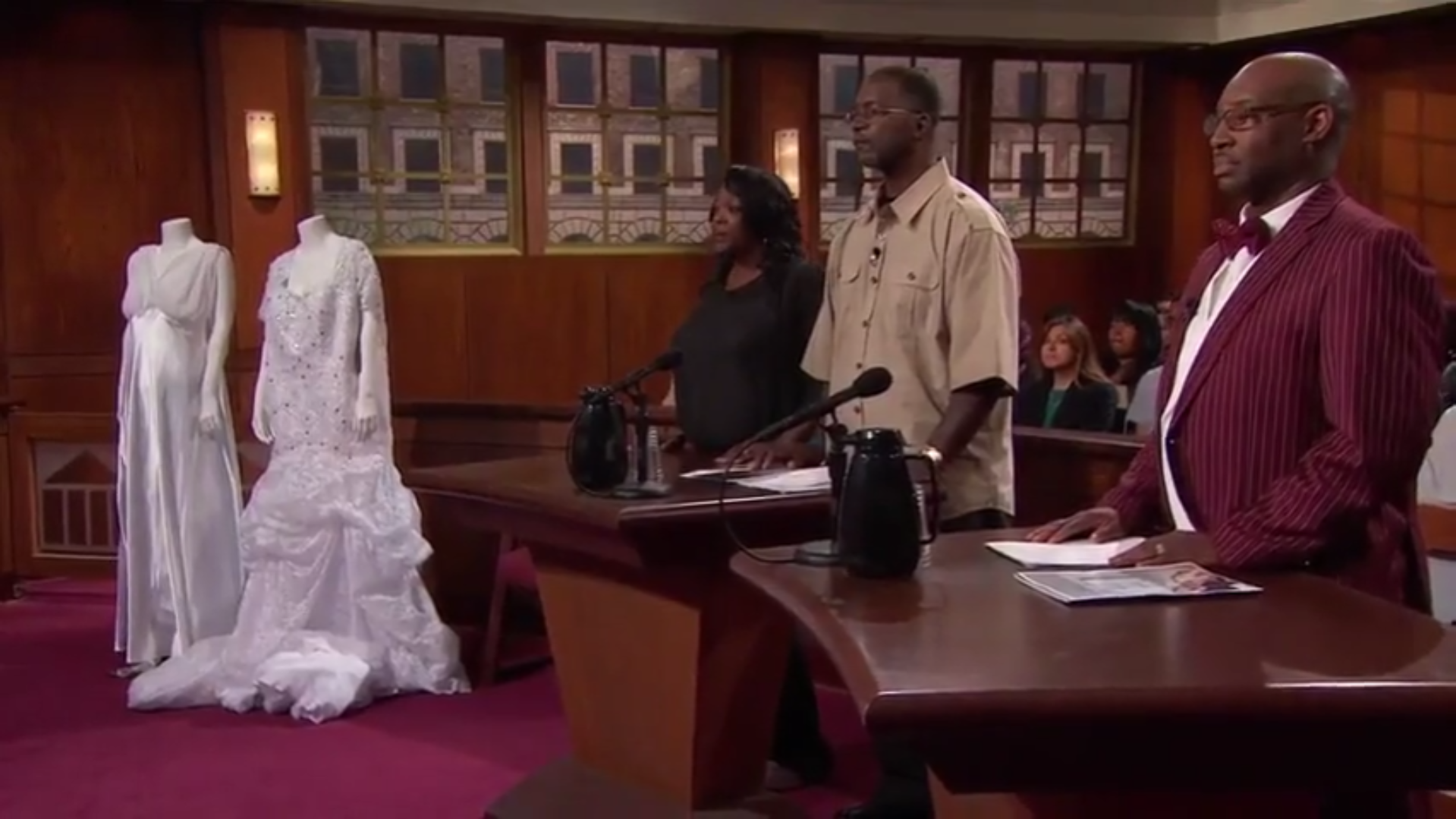
According to Felicia, McKinney offered no solution and walked away to assist another customer in the store, leaving her with the outside seamstress. The seamstress took the dress to her own independent shop to attempt emergency alterations.
Felicia visited the third-party workspace just three days before the ceremony. When she tried on the altered garment, the problem had worsened: releasing the seams had not created functional room, the garment remained unwearable, and she still could not sit down. With no time left before the July 30 ceremony, Felicia abandoned the gown at the shop and secured an alternative dress elsewhere.
The Subcontracting Revelation in Court
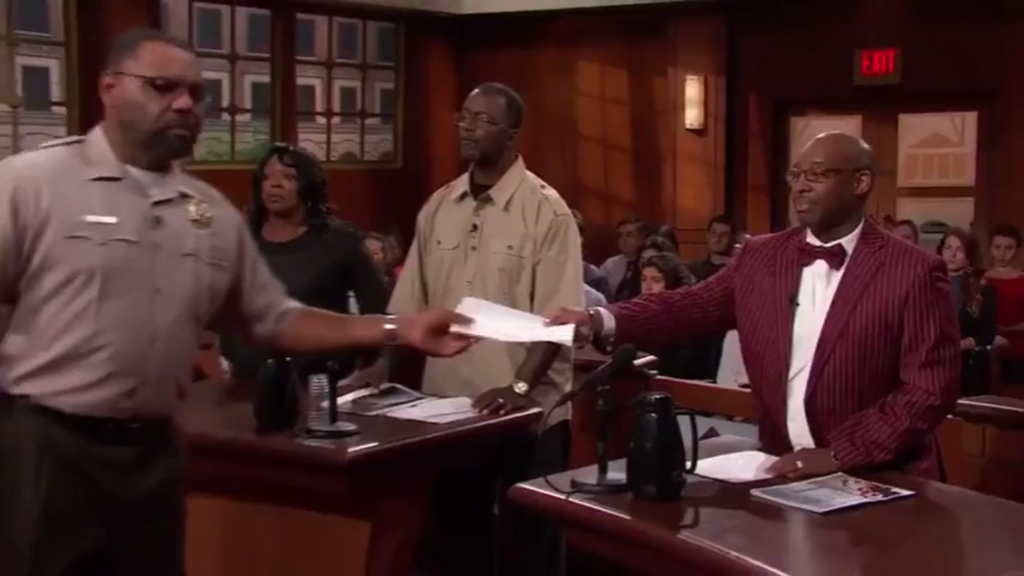
In small claims court, Wadell Newman filed suit against McKinney seeking a full return of the money paid for the dress, along with damages for emotional distress, aggravation, and the cost of the replacement gown.
Judge Judy immediately narrowed the legal scope of the action. She informed Newman that small claims court does not award speculative sums for emotional distress or aggravation in routine breach of contract disputes, nor could the plaintiff recover both the original purchase price and the cost of a replacement garment. The hearing was strictly limited to the funds paid directly to McKinney.
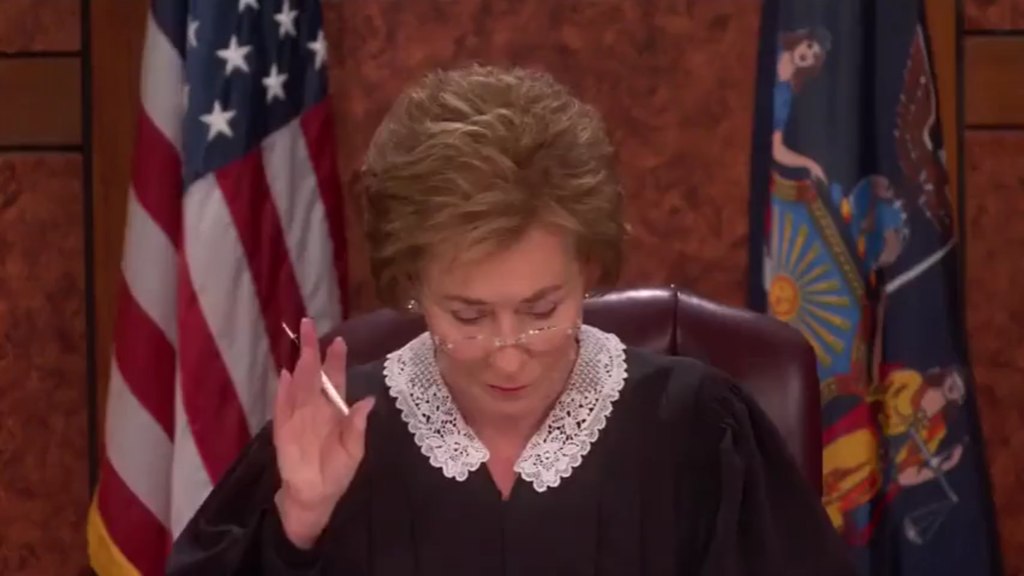
The pivotal moment of the hearing arrived when Judge Judy questioned McKinney on the physical construction of the garment. Under direct cross-examination, McKinney conceded that he had not made the dress himself:
- The Role of the Defendant: McKinney had merely taken the preliminary measurements and consulted the catalog styles.
- The Role of the Third Party: He subcontracted the actual pattern drafting and garment fabrication to an outside entity.
This revelation exposed the structural breakdown. McKinney had acted as an intake broker without maintaining quality control over the outsourced manufacturing. When the garment arrived with flawed dimensions, McKinney lacked the technical involvement or pattern files necessary to correct the cut, leaving the customer to negotiate repairs with an outside seamstress who had never measured the bride.
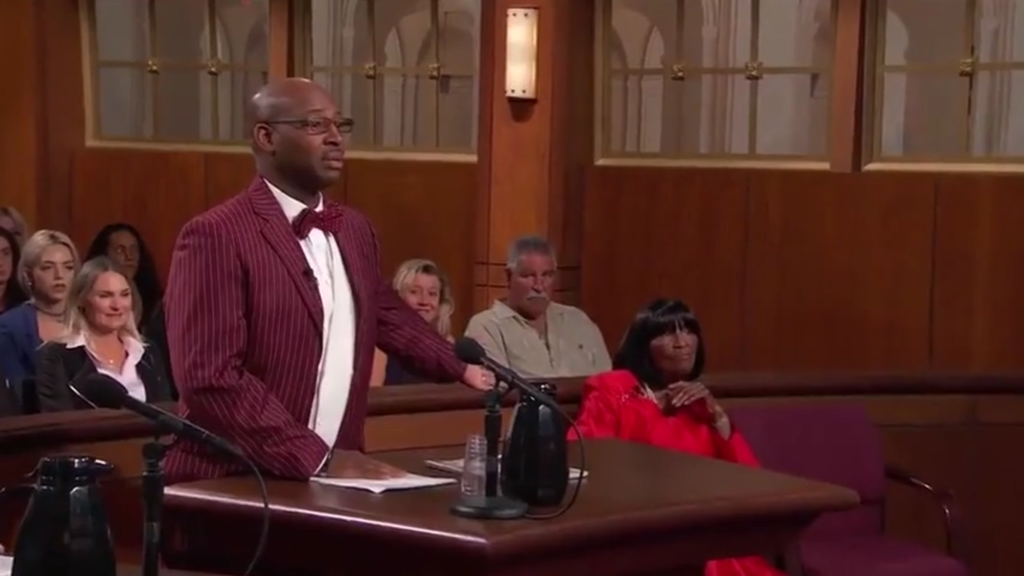
Furthermore, McKinney appeared in court accompanied by his mother rather than the seamstress who performed the alterations, leaving the defense without direct witness testimony regarding the attempted repairs.
The Bench Inspection: Testing the Fabric
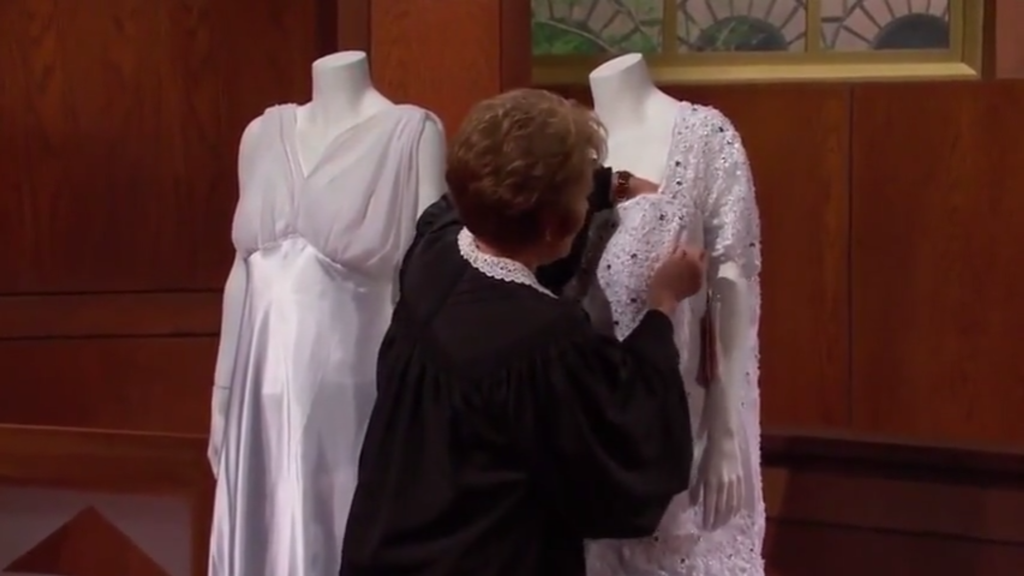
To resolve the conflicting claims regarding the textiles, Judge Judy ordered the physical gown brought directly to the bench.

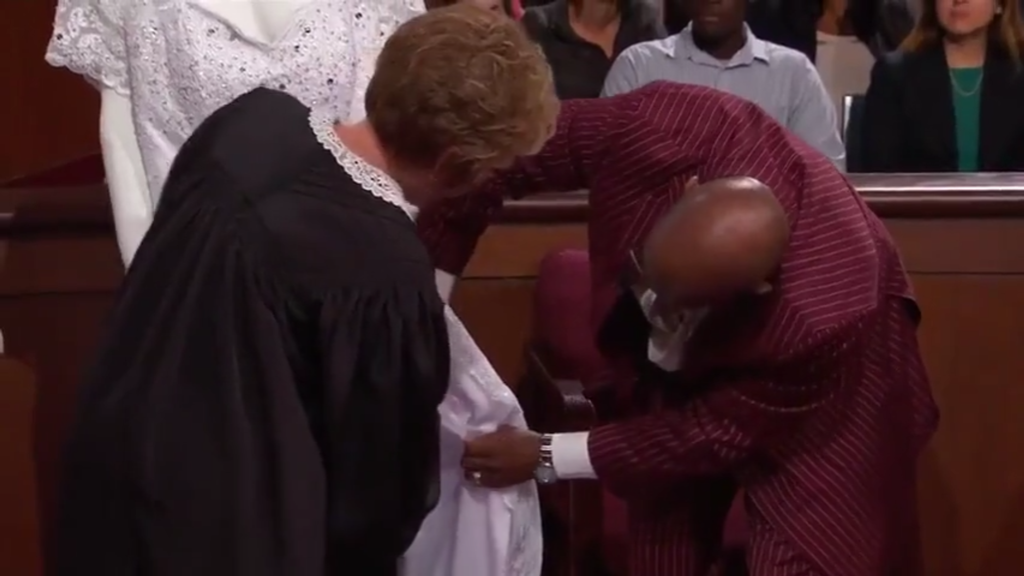
McKinney argued that while the upper bodice lining was standard fabric, the lower hip portion incorporated flexible material. Judge Judy called McKinney to the bench and instructed him to physically demonstrate where the stretch existed.
Examining the interior lining across the torso and hips, Judge Judy physically tested the fabric’s give. The inspection confirmed Felicia’s testimony: the lining was standard, rigid satin throughout, possessing no elasticity.
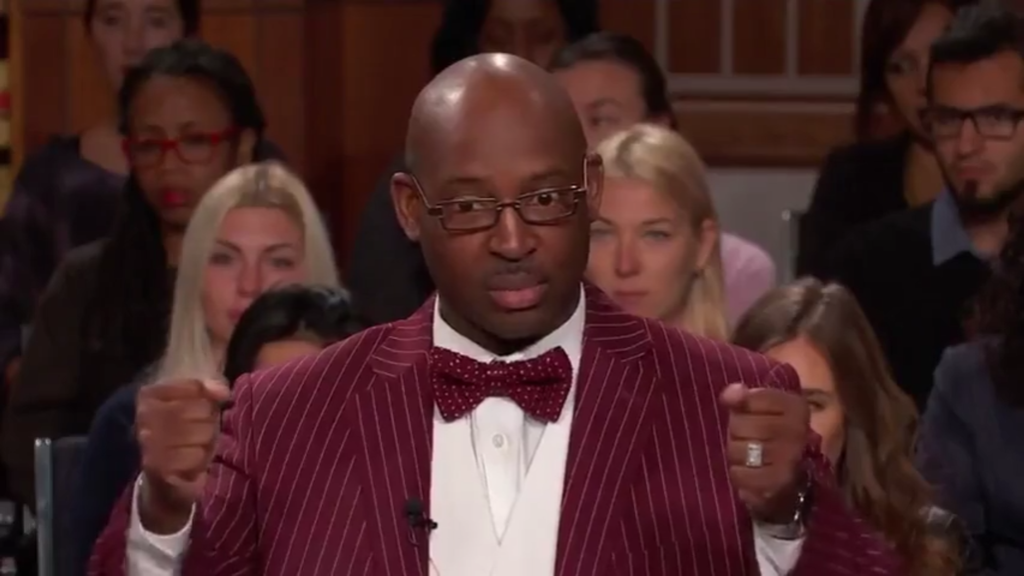
Judge Judy noted that while significant labor had been expended on the exterior lace, the failure to provide the agreed stretch lining combined with inaccurate preliminary measurements rendered the custom garment completely unfit for its intended purpose.
Financial Reckoning and Judge Judy’s Ruling

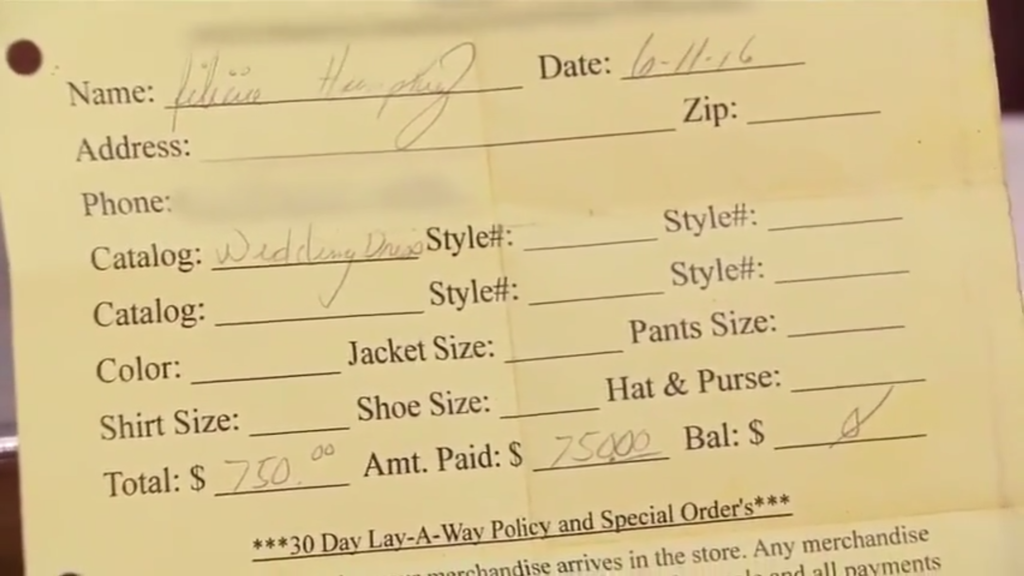
The final phase of the proceeding focused on establishing the exact sum paid. Wadell Newman submitted receipts and billing paperwork for the court’s review.
The documentation included separate retail items, noting shoes and a catalog wedding dress entry totaling $750. After examining the receipts, the court confirmed that $750 represented the specific sum paid for the custom gown order.
In delivering her final judgment, Judge Judy outlined the four factual findings supporting liability:
- McKinney took inaccurate preliminary body measurements.
- McKinney failed to provide the contracted stretch or spandex lining.
- McKinney outsourced the manufacturing to a third party without ensuring dimensional accuracy or fabric compliance.
- The dress remained unwearable after multiple fittings, forcing the client to abandon the garment days before the wedding.
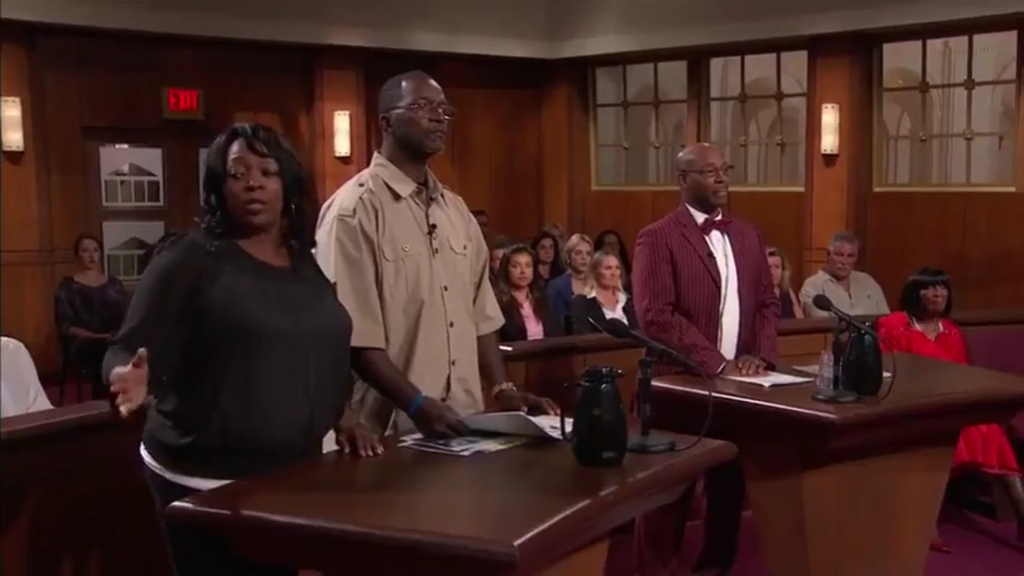
Judge Judy entered a full judgment of $750 in favor of plaintiff Wadell Newman, dismissing all remaining claims.
What the Case Reveals About Custom Vendor Contracts
Following the bench ruling, both parties reflected on the conflict in their post-court interviews:
- The Plaintiff: Wadell Newman recounted the heavy emotional toll on his household, stating that his fiancée had cried every night during the final two weeks as fitting after fitting failed.
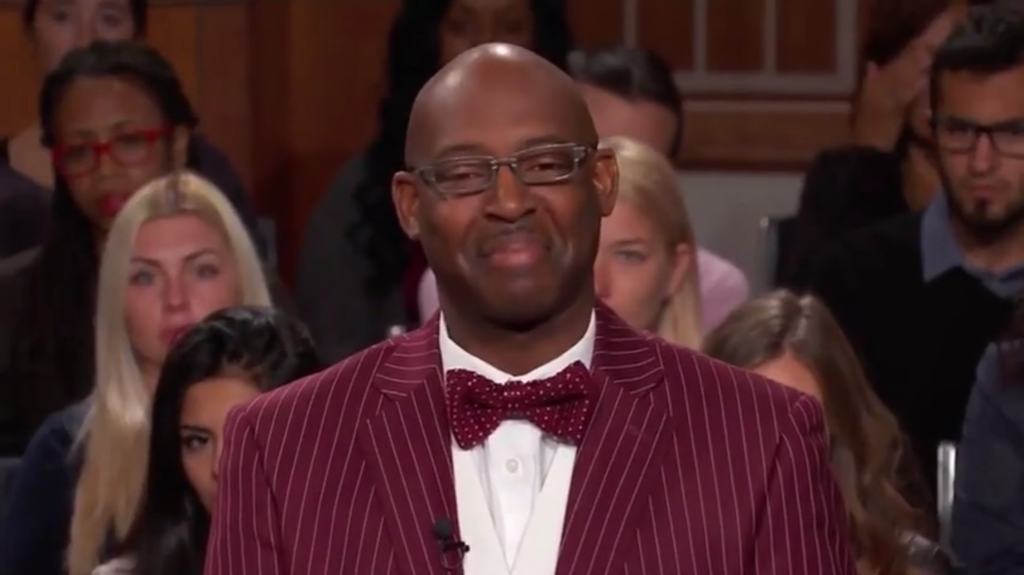
- The Defendant: Corey McKinney accepted the outcome with professional resignation, remarking: “You just can’t please everybody. Hey, the bride is always right… You gotta make that woman happy.”

Beyond the immediate courtroom drama, Newman v. McKinney illustrates key legal and practical lessons in consumer contracts:
- Subcontracting Liability: A business that contracts to deliver a custom service remains fully liable for defects created by third-party subcontractors.
- Material Specifications: When a customer makes a specific functional requirement (such as stretch fabric for mobility) an express condition of the order, delivering a non-compliant material constitutes a material breach.
- Measure of Damages: In small claims court, recoverable damages for defective goods are generally restricted to the contract price paid, excluding secondary emotional distress or replacement costs.
FAQ
Wadell Newman sued South Bend dressmaker Corey McKinney to recover $750 paid for a custom bridal gown made for his fiancée, Felicia. The plaintiffs established that the gown was made with the wrong fabric lining, was cut to incorrect measurements, and was unwearable.
The dress lacked the requested stretch/spandex lining, was cut too narrowly in the hips to permit sitting, and featured misaligned bust cups that did not match the bride’s frame.
No. McKinney admitted under oath that he only took the initial measurements and style selections, while subcontracting the actual pattern making and garment assembly to an outside maker.
Judge Judy ordered the dress brought to the bench and physically tested the elasticity of the interior lining, confirming it was rigid, non-stretch satin rather than the contracted stretch material.
Judge Judy awarded Wadell Newman a full refund of $750 against Corey McKinney. She dismissed additional claims for stress, emotional distress, and the cost of buying a replacement dress.