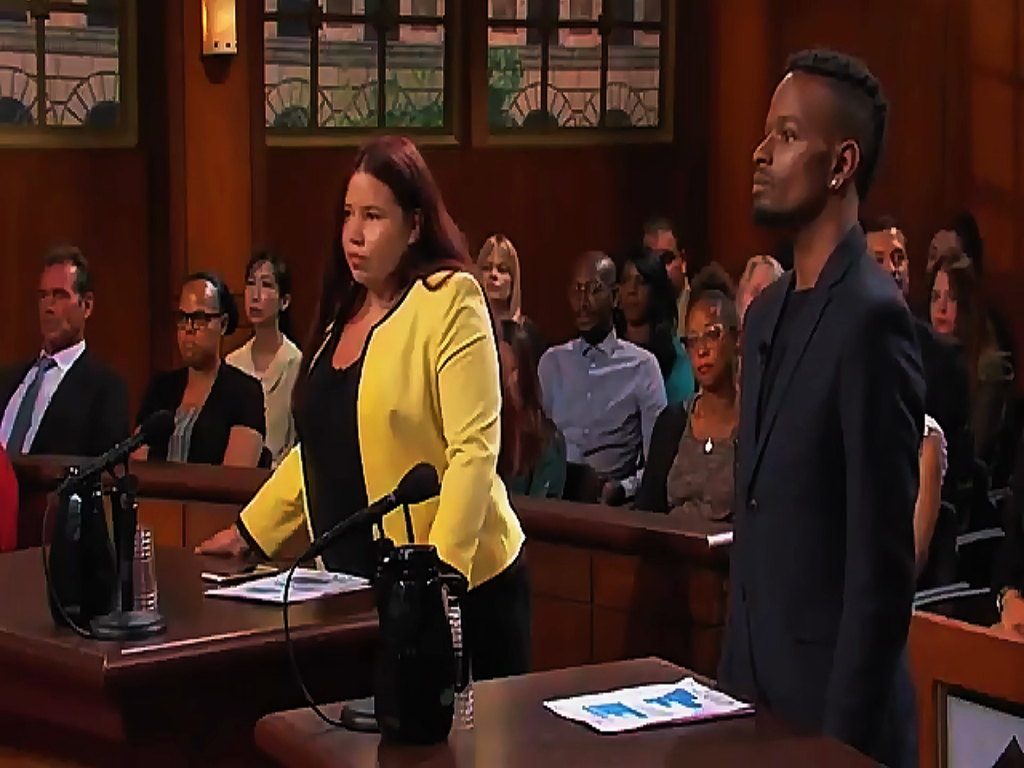
Miss McKay paid hundreds of dollars to remove an expensive phone from a lease while she and Mr. Peters were rekindling a relationship that dated back to school. Within weeks, their relationship collapsed and she wanted the money back. Peters insisted the phone had been a gift, but one admission changed the direction of the case: after McKay demanded repayment, he agreed to give her money and actually made a payment.
(uc.)
A Relationship Dating Back to School
The Judge Judy phone dispute involved Miss McKay and Mr. Peters, two people whose relationship stretched back years before the lawsuit. Peters told Judge Judy that McKay had been his girlfriend on and off beginning around middle school. They later dated during high school, although his answers about exactly how long they were together shifted slightly during questioning.

Peters graduated from high school in 2011. Afterward, he and McKay sometimes remained friends, while at other times their relationship was less stable. By early 2017, however, they had reconnected. Peters said they were friends in February and were discussing the possibility of dating again.

By the beginning of March, their relationship had become physical. That reconciliation created the backdrop for the expensive purchase that eventually brought them before Judge Judy.
An Expensive Phone Enters the Relationship
The phone arrangement began around February 2017. Peters explained that the device originally operated under a leasing agreement. He was paying the phone bill, and part of that monthly arrangement included money toward the device itself.

Judge Judy wanted the exact value because McKay was suing Peters for the phone. Peters initially described it as a $788 phone, while McKay corrected the figure and said the cost was $739.59. The difference mattered because the judge wanted to know exactly what McKay had paid and why.

Peters still had the phone when the parties appeared in court. The real dispute was whether McKay’s payment had transformed the device into an unconditional gift or whether Peters had an obligation to reimburse her.
McKay Pays to Remove the Phone From the Plan
Peters described how the original arrangement changed. According to his testimony, McKay told him that her mother had discovered he was connected to the phone plan and did not want him associated with her credit. McKay therefore wanted to remove the device from the existing leasing arrangement.

Peters said McKay apologized and told him she would take the phone off the plan. Under his version of the conversation, she told him he could keep the device and take it to another service provider. Peters did exactly that.

Most importantly, Peters acknowledged that McKay paid for the phone when the leasing arrangement ended. He did not dispute that she had covered the cost. Instead, his defense depended on why she had paid it.
He considered the phone a gift.
Their Relationship Falls Apart Within Weeks
The timing immediately attracted Judge Judy’s attention. McKay paid to release Peters from the phone obligation while their personal relationship was improving. Yet by March, the friendship and romantic reconciliation were already breaking down.

Peters said they stopped getting along and began going back and forth. Judge Judy observed that the deterioration occurred within roughly a month of Peters receiving the expensive phone arrangement.
Once their relationship ended, McKay wanted reimbursement. Peters said that was when she began demanding money for the device. She eventually appeared at his workplace with a friend and demanded the phone or payment.

From Peters’ perspective, McKay was trying to reverse a gift because the relationship had failed. Judge Judy, however, wanted to know what he did after she started demanding repayment.
Peters Says the Phone Was a Gift
Peters’ central argument sounded simple. McKay had voluntarily paid off the phone, told him he could take it to another carrier and allowed him to keep it. Therefore, he viewed the device as a gift.

Judge Judy understood that position. She also recognized the emotional context surrounding the transaction. McKay had relieved Peters of an expensive obligation while they were reconnecting, only for their relationship to end within weeks.
The judge suggested that McKay did not want to feel that Peters had benefited from her generosity and then immediately walked away. Yet the emotional history alone did not answer whether Peters had later accepted an obligation to repay her.
That question became far more important than the original label attached to the phone.
McKay Starts Asking for Her Money
After the breakup, McKay began contacting Peters about repayment. Peters acknowledged that she had texted him before she appeared at his workplace. Judge Judy carefully established that timeline because Peters had included the workplace incident in his counterclaim.

The judge asked whether McKay had texted, emailed or called him before showing up. Peters initially said she had not contacted him immediately before the workplace visit, but he admitted that she had previously sent messages asking when he planned to pay for the phone.
The timing placed those communications around April, shortly after the relationship had deteriorated in March. Judge Judy then asked the question that would become decisive: How had Peters responded when McKay asked him to pay?
His answer weakened the gift defense considerably.
Peters Agrees to Give McKay Money
Peters admitted that he had responded to McKay’s request. He told Judge Judy that he said, “Yes, I will give you some of the money for the phone.”

He immediately tried to qualify the statement. Peters continued to insist that the device had originally been a gift. He also began referring to gifts he had given McKay during their relationship.
Judge Judy did not allow him to redirect the discussion. She had already obtained the important admission: after McKay demanded money, Peters agreed to give her some of it.

The judge then went one step further. She asked whether Peters had ever actually made a payment. He had.
A $40 Payment Changes the Case
Peters admitted that he had given McKay a small payment. When Judge Judy asked how much, he estimated that it was approximately $40.
That answer ended the hearing almost immediately.

The significance was straightforward within Judge Judy’s reasoning. Peters had argued that the phone was an unconditional gift. Yet when McKay later demanded repayment, he did not simply reject her demand and maintain that he owed nothing. Instead, he agreed to provide some of the money and then followed through by making a payment.

Judge Judy treated that conduct as sufficient to resolve the dispute in McKay’s favor. She did not continue debating the history of the relationship or Peters’ claim that he had also given McKay gifts.
The Workplace Visit Becomes Peters’ Counterclaim
Peters had also filed a counterclaim connected to what happened after the breakup. He told Judge Judy that McKay came to his workplace with a friend and demanded money for the phone.

The transcript does not provide a detailed separate damages calculation for that counterclaim. Instead, Judge Judy focused on the fact that McKay had already contacted Peters about the money before going to his job. His own testimony established that the demand for payment had not appeared without warning.

Once Peters admitted promising repayment and making approximately a $40 payment, Judge Judy ended the case. The transcript does not show a separate award to Peters on his counterclaim.
The financial dispute over the phone controlled the outcome.
Judge Judy Rules for Miss McKay
The Judge Judy phone dispute ended abruptly after Peters’ admission. Judge Judy repeated the phone figure and announced judgment for the plaintiff. The transcript renders the ruling as “$739, judgment for the plaintiff.”

That amount closely corresponds to McKay’s earlier testimony that the phone cost $739.59. Because the subtitle transcript itself records the announced judgment as $739, this article uses $739 as the final stated judgment rather than silently recalculating the award.
This distinction matters because Peters also testified that he had already paid approximately $40. The transcript does not show Judge Judy explicitly subtracting that payment from the announced $739 figure. It would therefore be inaccurate to invent a different final judgment based on our own arithmetic.
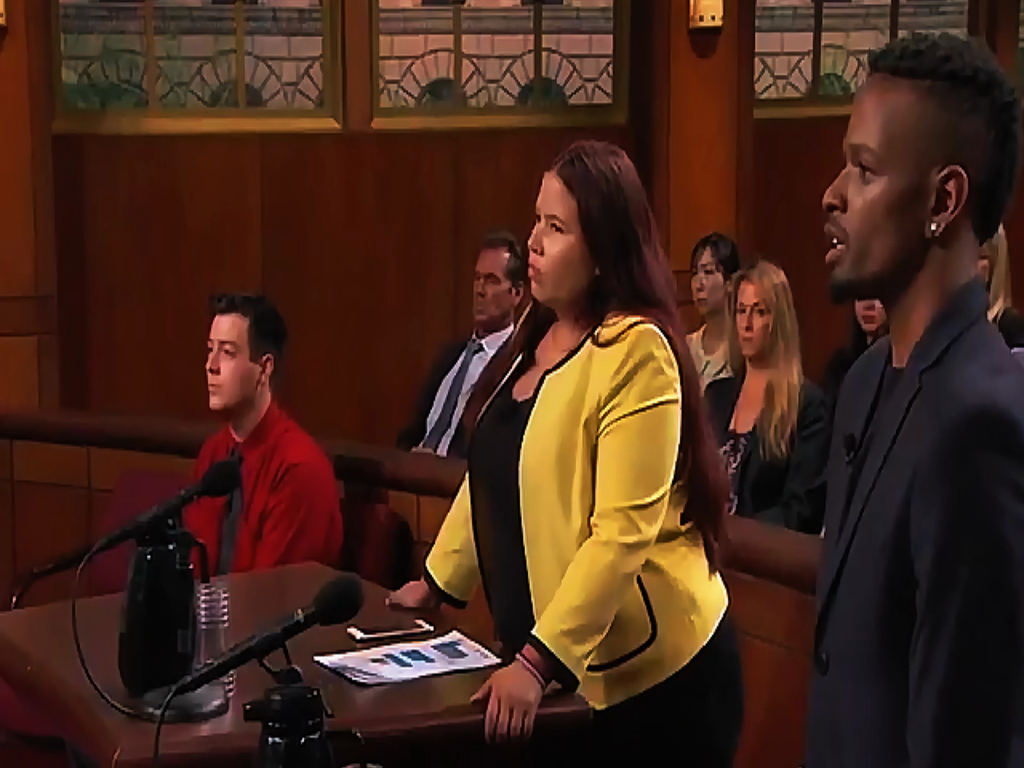
The safest reading is the one the courtroom transcript directly provides: Judge Judy ruled for McKay and announced $739.
Why Peters’ Own Conduct Mattered
Peters entered the hearing with a potentially important factual argument. He said McKay had voluntarily taken the phone off the leasing arrangement and told him he could use it with another service. From his perspective, those circumstances showed that she had given him the phone.

The later conduct created the problem. Once McKay asked for money, Peters acknowledged that he would give her some. He then made an actual payment of approximately $40. Judge Judy treated those admissions as inconsistent with his attempt to insist that he had no repayment obligation.

The case therefore did not turn on a lengthy examination of the couple’s romantic history. Nor did Judge Judy spend time calculating the value of gifts Peters said he had previously given McKay. His own response to her repayment demand provided the evidence she needed.
The Relationship Ends, but the Phone Bill Remains
After court, the bitterness between the former couple was still obvious. McKay said she had taken out the phone as a favor and accused Peters of failing to pay her back. Peters expressed hope that they could move forward peacefully.

McKay also made clear that she had learned from the experience. Her final comment was essentially a warning to herself: Peters should buy his own phone, and she would not put herself in the same situation again.
Their personal relationship had moved between friendship and romance for years. The phone dispute lasted only a few months. Yet a purchase made during their brief reconciliation became the financial issue that finally severed the connection between them.

For Judge Judy, Peters’ own actions supplied the answer. He said the phone was a gift—but he also agreed to repay some of its cost and admitted that he had already started doing so.
(uc.)
FAQ
What was the Judge Judy phone dispute about?
Miss McKay sued her former boyfriend, Mr. Peters, over an expensive phone. McKay paid to remove the device from a leasing arrangement while the two were reconnecting romantically. After their relationship deteriorated, she demanded money for the phone.
How much did the phone cost?
Peters initially referred to the phone as costing approximately $788. McKay corrected the amount to $739.59. The transcript later records Judge Judy announcing $739 when she entered judgment for McKay.
When did McKay and Peters reconnect?
Peters said they were friends and discussing dating in February 2017. Their relationship became physical around the beginning of March but deteriorated later that month.
Why did McKay pay for Peters’ phone?
According to Peters, McKay wanted to remove him from a leasing arrangement connected to her plan or credit after her mother learned about it. He testified that McKay paid for the phone and told him he could take it to another service provider.
Did Peters say the phone was a gift?
Yes. Peters repeatedly argued that McKay had given him the phone as a gift. He maintained that she only began demanding money after their personal relationship deteriorated.
Did McKay ask Peters for money before going to his workplace?
Yes. Peters acknowledged that McKay had previously texted him and asked when he would pay for the phone. Her workplace visit occurred after those earlier repayment demands.
Did Peters ever agree to repay McKay?
Yes. Peters admitted telling McKay that he would give her some of the money for the phone. That admission became important during Judge Judy’s questioning.
Did Peters make a payment toward the phone?
Yes. He told Judge Judy that he had made a small payment of approximately $40 to McKay.
What happened to Peters’ counterclaim?
Peters referenced McKay’s visit to his workplace as part of his counterclaim. The supplied transcript does not show Judge Judy awarding him damages. The hearing ended immediately after the judge ruled for McKay on the phone dispute.
How much did Judge Judy award Miss McKay?
The transcript records Judge Judy announcing “$739, judgment for the plaintiff.” McKay had previously identified the phone’s cost as $739.59.
Was the $40 payment deducted from the $739 judgment?
The supplied transcript does not show Judge Judy explicitly performing that subtraction. Because the ruling itself is transcribed as $739, this article does not invent a $699 judgment or another adjusted amount.
Sources
Judge Judy, the complete supplied subtitle transcript. It establishes the history between Miss McKay and Mr. Peters, their 2017 reconciliation, the phone arrangement, McKay’s payment for the device, Peters’ gift defense, the subsequent repayment demands, the workplace visit, Peters’ promise to provide some money, his approximately $40 payment and Judge Judy’s ruling for the plaintiff.