When Joseph Zintek Jr. entered prison, his wallet, credit cards, identification, watch, and jewelry were placed in the hands of the woman he trusted. Sixteen months later, that trust had collapsed into disputed purchases, missing money, a tax refund, and personal property passed through friends whose last names were barely known. Did Amy Eddie have permission to use the accounts, or did access become an opportunity? The answer emerged not from one dramatic transaction, but from a trail stretching from Buffalo stores to a Florida souvenir shop and a cable bill transferred into Eddie’s home.

(uc.)
Property Handed Over at Sentencing
Joseph Zintek Jr. sued his former girlfriend, Amy Eddie, over unauthorized credit-card charges, money allegedly taken from bank accounts, a tax refund, and personal belongings he said were never returned. The dispute began with a transfer of property that was not secret or accidental.

On February 11, 2016, after Zintek was sentenced, his lawyer, Mr. Goldstein, handed Eddie the personal effects that could not remain with him. Eddie acknowledged receiving Zintek’s wallet. Inside were credit cards, identification, a driver’s license, and other items.

She remembered cards connected to Walmart and Capital One, possibly more than one Capital One account. She also received jewelry, including a diamond earring, a ring, and a watch described in the transcript as a Pulse watch. Zintek characterized the items as valuable and later relied on a letter from his lawyer to document that Eddie had taken custody of them.
A Relationship Changed Behind Bars
The timeline in the transcript contains an early correction. Zintek first referred to August 31, 2016, then corrected the relevant year to 2015 when discussing the beginning of his incarceration. He told the court he served 16 months and was released on June 5 of the year of the hearing. The transfer letter, however, was dated February 11, 2016, the date connected to sentencing and delivery of his belongings.

While Zintek remained confined, the romantic relationship deteriorated. He told the court that Eddie wanted him to marry her and had sent a statement to the prison superintendent without his knowledge. A letter dated June 25, 2016, became the point after which Zintek tried to have other people collect his belongings.

Zintek said contacting friends and arranging a pickup from prison took time. He described repeated calls in which Eddie allegedly acknowledged having the property but linked its return to receiving a document that would protect her from financial responsibility for the credit cards. Eddie denied withholding the items in that way and said Zintek’s friends had collected them.
The Credit Card Trail
Eddie did not deny using the cards. When the judge asked directly whether she had used Zintek’s credit cards while he was incarcerated, she answered yes. Her defense was authorization: she claimed Zintek had told her to make certain purchases, pay specific obligations, and, more broadly, use the accounts because he intended to file for bankruptcy after prison.

The judge separated expenses arguably made for Zintek from purchases made for Eddie, her relatives, or her friends. Eddie first pointed to a payment she said covered one of Zintek’s fines. The judge redirected her to the personal spending. Eddie then acknowledged buying a vacuum cleaner costing about $201 and an LG phone for herself, while maintaining that Zintek had encouraged her to replace her phone.

Those admissions changed the character of the case. Eddie was no longer arguing that every charge had been made exclusively for Zintek. She accepted that she had acquired personal items with his available credit, leaving the court to decide whether her claim of permission was credible.
Purchases in New York
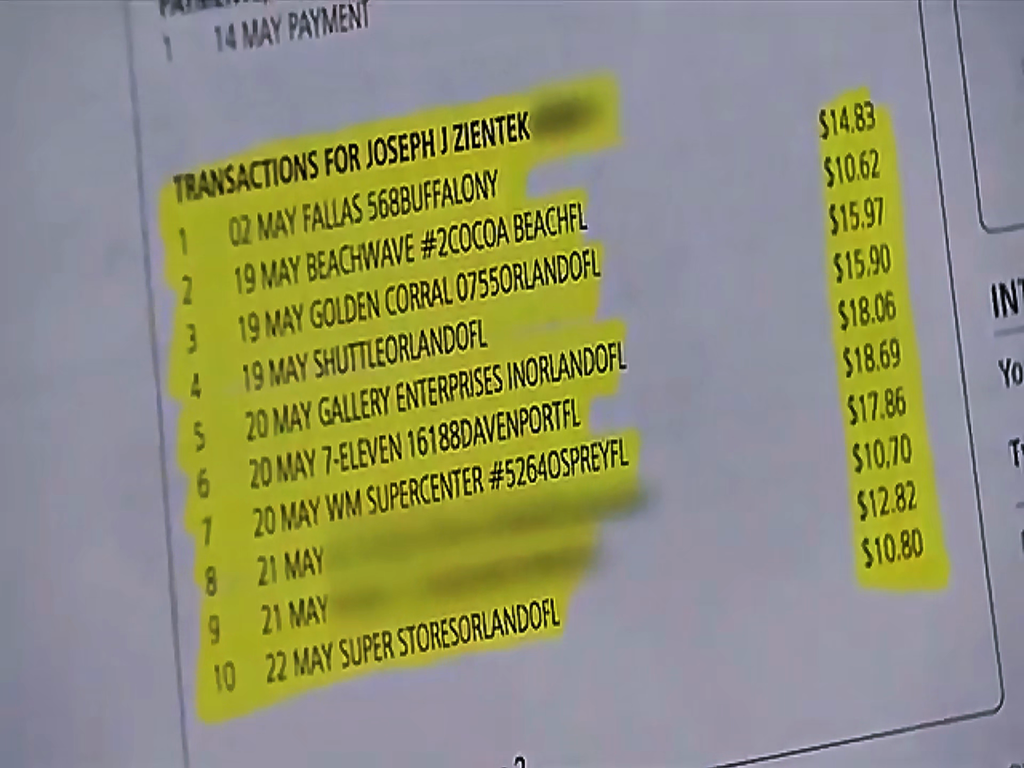
The judge read through the card statements transaction by transaction. Charges appeared at a location on the Tuscarora reservation in Sanborn, New York. Eddie said she had gone there to purchase cigarettes for Zintek and acknowledged visiting twice on the same day. Other purchases were less clearly explained.

There were transactions at Value Home Center in Buffalo, including more than one visit, and a $103.50 charge in West Seneca that Eddie said she could not remember. A charge at Lockport Fuel appeared to be for gasoline. At Dollar Tree, Eddie claimed she spent $29.56 on items for Zintek’s commissary. The explanation drew skepticism because, as Zintek stated, prison commissary purchases were made through the institution using money placed in an inmate account, not by directly buying goods at Dollar Tree.
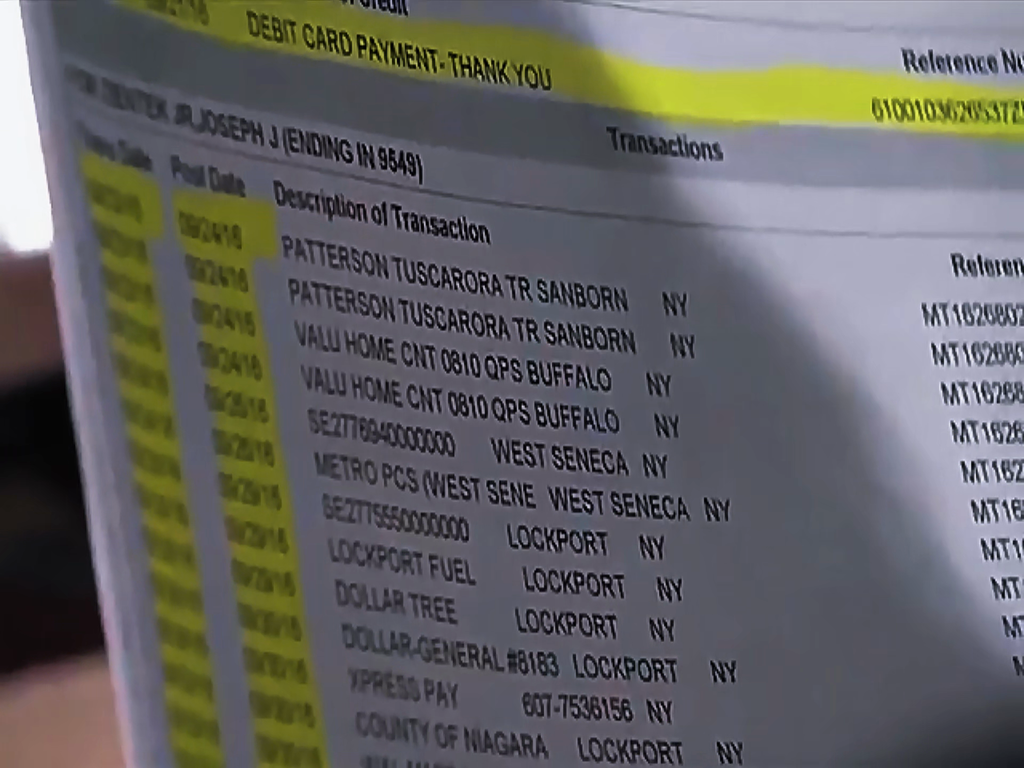
Walmart charges raised further questions. One was approximately $84. Eddie said it covered clothing, shirts, sheets, and a food package for Zintek. Another Walmart transaction totaled $293.61. She attributed that purchase to blankets, towels, bedding, and supplies carried to the prison by Zintek’s friend George. Zintek denied receiving them. Eddie added that inmates could receive a 35-pound food package, but the judge remained troubled by how her explanations shifted across the statements.
The Florida Transactions
The spending was not confined to western New York. Statements showed transactions in Cocoa Beach, Florida, during May 2016, while Zintek remained incarcerated. Eddie admitted using his cards during a vacation with her sister. At a store identified as Beach Wave, she bought souvenirs.
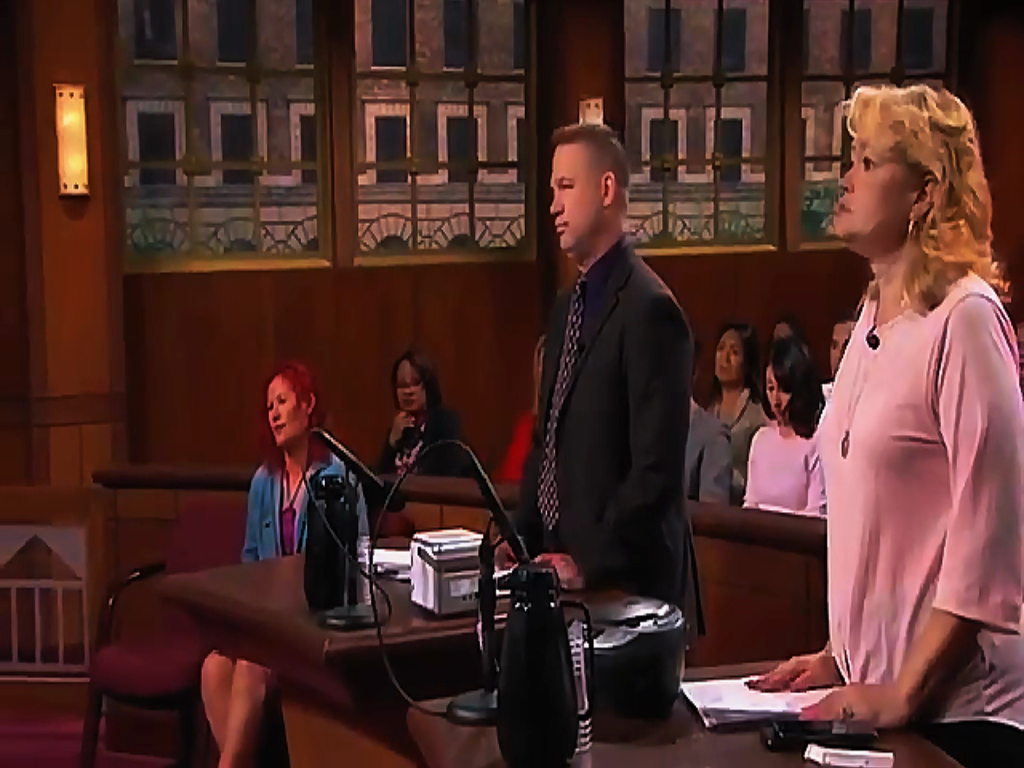
Eddie said she visited Zintek at the prison before traveling and asked for permission to use the card. According to her, he agreed in front of George. She was not employed and said she was disabled after two back surgeries. Her sister Janet, she testified, paid for the airline tickets.
The Tax Refund and Bank Withdrawals
Zintek also accused Eddie of filing his taxes and taking the refund. The figures read in court were $1,397 from the federal return and $379 from the state, for a combined $1,776.

Eddie said Zintek told her to withdraw the money and that she placed it in an envelope for his friend George. She said her sister was present, counted the money, and helped identify the envelope when George collected property.

There was no receipt for that transfer. Eddie conceded that point, laughing nervously before insisting the money had been handed over. Zintek denied receiving it. The absence of a written acknowledgment left the alleged handoff dependent on the credibility of Eddie, her sister, and the friend who supposedly received the cash.
Recorded Calls Complicate the Story
The recorded calls prevented either side from presenting a completely simple account. They offered evidence that Zintek had granted Eddie at least some financial authority. At the same time, Eddie’s own written answer created a more serious problem for her defense.
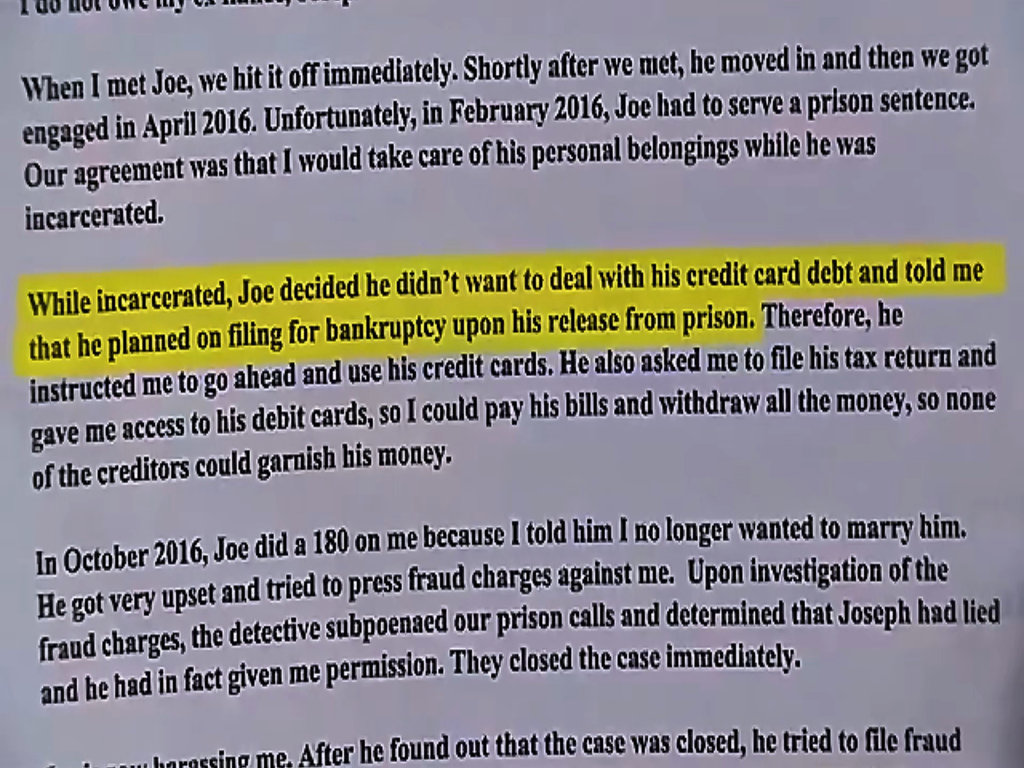
In that answer, Eddie said Zintek had decided not to deal with his credit-card debt and planned to file for bankruptcy upon release. She wrote that he therefore instructed her to continue using the cards.
The judge explained that this theory did not excuse the purchases. If Eddie knowingly used credit with the understanding that Zintek never intended to repay the lenders, she would be participating in a plan to defraud the credit-card companies.

That exchange undermined the value of Eddie’s claimed permission. Authorization from the cardholder did not automatically make every use legitimate, especially when her stated understanding was that the resulting balances would be discharged rather than paid. The judge concluded that Eddie’s account made her unreliable, whether the purchases were unauthorized or made as part of the plan she described.
The Cable Account Transfer
A Time Warner Cable account became another example of blurred permission. Zintek acknowledged that he had placed the cable service in his own name while living with Eddie. Her house had been damaged by fire, and insurance was paying the rent at the temporary location. Under their arrangement, Eddie told Zintek to put cable in his name instead of paying half of the electric bill.\
That meant Eddie had not opened the original account without permission. The dispute arose later. On April 1, 2016, after she returned to her house while Zintek was incarcerated, Eddie transferred his cable account to her residence. Zintek said he had told her to shut it off.

Eddie initially said she had not previously had cable at her home because she had been living in a hotel after the fire. When the judge clarified the question, Eddie acknowledged that the house had once had cable, though the account had been in her daughter-in-law’s name. The contradiction reinforced the judge’s view that Eddie had used Zintek’s financial identity for a service benefiting her household.
Property Passed Through Friends
The personal-property claim was complicated by multiple pickups and uncertain names.

Eddie said a friend named Carl collected Zintek’s wallet in November 2016, though she did not know Carl’s last name beyond believing it began with V. She also referred to George collecting property on an earlier trip and Carl or George returning for a shelf, a backpack, jewelry, and the watch.
The $5,000 Judgment
After examining the credit-card statements, recorded-call summary, tax refund, cable account, and conflicting testimony, the judge entered judgment for Joseph Zintek Jr. in the amount of $5,000. The transcript describes the award as being “for harassment.” Eddie’s counterclaim was dismissed.
The ruling did not itemize how much of the $5,000 corresponded to each card charge, the tax refund, the cable account, or the disputed personal property.

It did establish the outcome: Zintek prevailed, Eddie received nothing on her counterclaim, and the judge rejected the credibility of Eddie’s overall defense.
What the Case Reveals
Zintek v. Eddie demonstrates how financial control can become dangerously ambiguous when one partner is incarcerated. Zintek needed someone outside the prison to safeguard property, manage bills, and communicate with friends. Eddie had access because the relationship had once involved trust. When that trust ended, neither cards nor accounts contained built-in boundaries defining what she could do.

The hearing also showed why informal permission is not the same as unlimited authority. Consent to use a prepaid card does not necessarily authorize purchases on every credit account. Permission to maintain service at a shared residence does not automatically authorize transferring it to a different home. And access to a tax refund does not prove that cash was delivered to a third party without a receipt.

For anyone placing finances in another person’s hands during incarceration, illness, deployment, or hospitalization, the practical lesson is clear. Written instructions should identify each account, permitted transactions, spending limits, recordkeeping duties, and the date authority ends. Property should be inventoried at every transfer, and cash should never pass through an intermediary without a signed acknowledgment.
(uc.)
FAQ
Who were the parties in Zintek v Eddie?
Joseph Zintek Jr. was the plaintiff, and Amy Eddie was his former girlfriend and the defendant. She received his wallet and personal effects when he was sentenced.
How long was Joseph Zintek Jr incarcerated?
Zintek testified that he was incarcerated for 16 months and was released on June 5 of the year of the hearing.
What purchases did Amy Eddie admit making?
Eddie admitted buying a vacuum cleaner and an LG phone for herself, using Zintek’s cards during a Florida trip, and making multiple purchases in New York. She claimed many transactions were authorized or made for Zintek.
How much was Joseph Zintek Jr tax refund?
The hearing identified a $1,397 federal refund and a $379 state refund, totaling $1,776.
What was the judgment in Zintek v Eddie?
The judge awarded Zintek $5,000, described in the transcript as an award for harassment, and dismissed Eddie’s counterclaim.
Sources
Judge Judy, the supplied courtroom transcript of Zintek v. Eddie, case number 191.
All disputed conduct is attributed to testimony, documents discussed in court, or the ruling recorded in the transcript.