When 21-year-old Mariah Green left Mark Love’s Illinois home on July 6, 2016, the business equipment she had brought with her remained behind a locked shed door. What followed was more than a disagreement over storage. Mark admitted that he withheld the property over a disputed $90 rent payment and later disposed of it. Mariah entered the Judge Judy courtroom seeking nearly $5,000 for equipment and lost work. She left with $100—and a ruling that separated wrongful conduct from an unsupported claim.

A Move Built Around a Grooming Business
Mariah Green’s plans in rural Illinois lasted less than three months.
She moved into Mark Love’s house on April 22, 2016, bringing equipment connected to a dog-grooming business. The arrangement placed her home and hoped-for livelihood on the same property: she rented space inside the house, while a shed held a grooming table, a dog bath or tub, and other large items.

Mariah later told the court that the business did not develop as she had hoped in the small town. She also said she had grown uncomfortable in the home. By July 6, she was leaving for Florissant, Missouri, about 30 minutes from the St. Louis area, where she planned to stay with a male friend named Jeff, whom she described as former law enforcement.

The move itself was not the central legal question. The conflict arose from what Mariah could not take with her—and what Mark did with it afterward.
The Informal $90-a-Week Rental
Mariah and Mark had no written lease. Mariah said Mark had insisted one was unnecessary, but the judge quickly identified an oral rental agreement: Mariah paid $90 per week to live in his home.

She testified that she paid when she moved in and remained current through April, May, and June. Mark disputed only the final week. He said Mariah owed $90 on July 8, two days after the date she said she moved out. His explanation was that she usually paid at the end of each week and still owed for the week she had occupied the house.

That unpaid-rent allegation became Mark’s reason for refusing access to the shed. In his account, Mariah left without his knowledge. He said he would have unlocked the shed and returned the equipment if she had paid the $90.
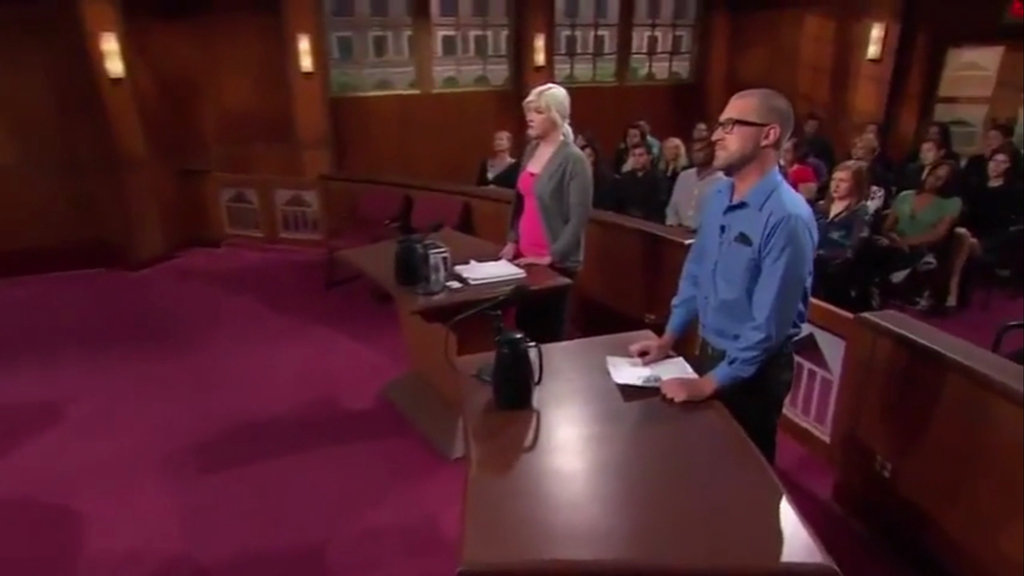
The judge drew a firm boundary between the two disputes. If Mark believed rent was owed, he could sue for it. The alleged debt did not authorize him to hold or dispose of Mariah’s property.
July 6: Mariah Leaves Without the Equipment

Mark was not home when Mariah moved out. She had her own car, but the grooming equipment remained in the shed while the house itself was unlocked.

Both sides agreed that the shed was locked. Mariah said Mark had the key. Mark explained that he routinely secured the structure because it also contained his work tools, lawn mower, and other belongings. His description of the shed as storage, however, raised an immediate question: if Mariah was supposed to operate a dog-grooming business there, how was she expected to enter it?

Mark’s answer was that she had never used the equipment at all. He said he helped place it in the shed on the day she arrived and that it did not move during the entire time she lived in the house. Mariah responded that Mark had not prepared the shed for her as promised.
Those competing explanations changed the shape of the case. The equipment was undeniably hers, but her claim also depended on proving that losing access to it caused thousands of dollars in missed work.

Two Accounts of a Business That Never Took Hold
Mariah framed the locked shed as an interruption to her earning ability. Mark described the same space as storage for equipment she never used.
The judge was openly skeptical of the lost-wages theory. Mariah had already testified that she moved because dog-grooming business was not “panning out” in the area. That admission weakened the argument that Mark’s later control of the equipment caused nearly $5,000 in lost income.

The court therefore asked for a simpler form of proof: paid bills or receipts establishing what Mariah had spent on the property in the shed.
Mariah said she bought the tub from a certified master groomer and paid cash. She also presented what she described as an Amazon receipt for the grooming table. The testimony then focused on a $100 purchase figure and a $479 new-condition price. The transcript does not clearly assign every figure to every item, so the safest conclusion is limited: Mariah offered some purchase documentation, but the judge did not accept her broader valuation.

Mark Admits Disposing of the Property
The decisive point did not come from an estimate or a receipt. It came from Mark.
Asked what he had removed, Mark acknowledged disposing of a table and dog bath, describing them as large items that occupied too much room in a shed he needed to enter every weekend. He also confirmed that he had initially retained the equipment because Mariah moved out without his knowledge and had not paid the disputed final rent.

That admission established the part of Mariah’s claim the judge was prepared to recognize. Whatever the equipment’s proven value—and regardless of whether the grooming business had produced regular work—Mark did not have the right to throw away property belonging to his former tenant.
The court repeated the point: he could not dispose of her belongings. Rent and personal property had to be handled as separate claims, not as a private exchange in which one side kept or discarded the other’s possessions.

Why the Lost-Wages Claim Failed
Mariah’s lawsuit sought almost $5,000, including earnings she said she lost because the equipment was unavailable. The judge declined to accept that portion of the case.

The evidentiary gap was straightforward. Mariah did not establish a reliable history of grooming income that continued until Mark withheld the tools. She acknowledged that the business had not succeeded in the town, while Mark testified that she had not used the equipment during her approximately three months at the house. When she attempted near the end of the hearing to say she could prove lost wages, the judge had already rejected the theory and ended the presentation.
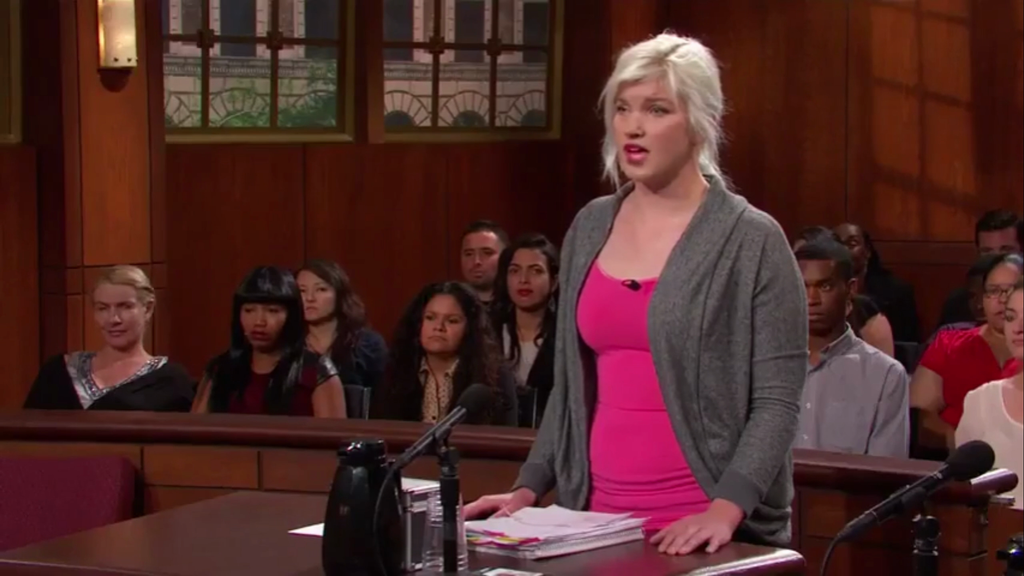
That did not make Mark’s disposal of the equipment permissible. It meant only that wrongful conduct and financial damages were two different questions. Mariah proved enough to obtain a small property award, but not enough to connect Mark’s actions to the much larger sum she demanded.
How a Nearly $5,000 Case Became a $100 Award
The judge entered judgment for Mariah in the amount of $100, describing it as “nuisance value.” She referred to a $479 new-condition price during the hearing but emphasized the evidence of what Mariah said she had actually paid.

The award was therefore not compensation for the full lawsuit. It did not include the claimed lost wages, and it did not adopt the retail replacement figure for new equipment. It was a limited recovery tied to the property Mark admitted he had discarded.
The closing exchange appears to begin addressing a counterclaim, but the supplied transcript does not preserve the sentence clearly enough to state its exact disposition or basis. Rather than complete a garbled subtitle with an assumption, the reliable result is the one spoken unmistakably: $100 for the plaintiff.

Afterward, Mark said he was content to pay $100 to put the equipment dispute behind him. Mariah’s request had been dramatically reduced, yet the ruling still confirmed that the locked shed and disputed rent did not give Mark ownership of what she had left there.
The Allegations the Court Did Not Resolve
In post-hearing interviews, the former roommates offered competing personal accusations. Mariah alleged that Mark sent messages while drinking, expressed romantic interest after she wanted a platonic landlord relationship, accessed her phone, and interfered with her communications with other men. Mark denied being able to use her phone and accused Mariah of repeatedly moving in with single men before leaving and seeking money. He called her a “con artist.” Their remarks also referenced finding roommates through Craigslist.

None of those allegations was established in the ruling preserved by the SRT. They help explain the hostility surrounding Mariah’s departure, but they should not be repeated as proven conduct. The judgment rested on narrower evidence: Mark admitted disposing of Mariah’s equipment, while Mariah did not substantiate nearly $5,000 in property value and lost wages.

The case ended where the documentary record was strongest. A failed business plan did not support the nearly $5,000 claim. A disputed week of rent did not become permission to throw away someone else’s belongings. Between those two conclusions stood a $100 judgment—small compared with what Mariah requested, but clear about the boundary Mark had crossed.
FAQ
Who were Mariah Green and Mark Love?
Mariah Green, then 21, rented part of Mark Love’s Illinois home while trying to establish a dog-grooming business. She later sued him over equipment left in his locked shed and income she claimed to have lost.
How much rent did Mariah Green pay Mark Love?
The oral rental agreement required Mariah to pay $90 per week. She said she was current through June 2016. Mark claimed she still owed $90 for her final week when she moved out on July 6.
What dog-grooming equipment did Mark Love dispose of?
Mark admitted disposing of a grooming table and a dog bath or tub because the large items occupied space in his shed. The transcript does not provide a complete inventory of any smaller equipment.
Why did Mariah seek nearly $5,000?
Her claim combined the value of the grooming equipment with wages she said she lost when she could not use it. The judge rejected the lost-income theory after Mariah acknowledged that the business had not been succeeding in the rural Illinois town.
How much did Judge Judy award Mariah Green?
Mariah received $100. The judge described that amount as nuisance value and tied it to Mark’s admitted disposal of property rather than the larger lost-wages claim.
Did unpaid rent allow Mark to keep Mariah’s equipment?
Not according to the ruling. The judge told Mark that if Mariah owed rent, he could sue her. He could not use the alleged debt as authority to withhold and dispose of her belongings.
Were the former roommates’ personal accusations proven?
No. Both made serious allegations in their post-hearing interviews, but the transcript does not show that the court adjudicated those claims. They should be treated as competing allegations, not established facts.
Sources
- Primary source: E8.2.srt, the complete 240-cue subtitle transcript supplied for this article. The timeline, names, monetary amounts, testimony, admissions, and judgment were checked against the full file.
- Simkl — Judge Judy, Season 21, Episode 66: confirms the November 10, 2016 air date and identifies the second segment as “Dog Grooming Business Fail.”
Source limitation: The SRT’s line concerning a possible counterclaim is garbled and incomplete. This article does not infer its grounds or outcome. All post-hearing accusations are attributed to the person who made them.